Dumpster dimensions are the thing most people check last and should check first. Volume tells you how much will fit inside the container. Dimensions tell you whether the container will fit on your property at all, and those are two very different questions. Before you book a roll-off, it is worth five minutes with a tape measure.
3D Solutions is based in Denver, Iowa and runs its containers out of a yard in Waterloo, so we place these things in Cedar Valley driveways every week. The measurements below are ours, not generic industry numbers, and the space guidance comes from what our drivers actually need to set a container down cleanly.
Dumpster Dimensions for Both Roll-Off Sizes
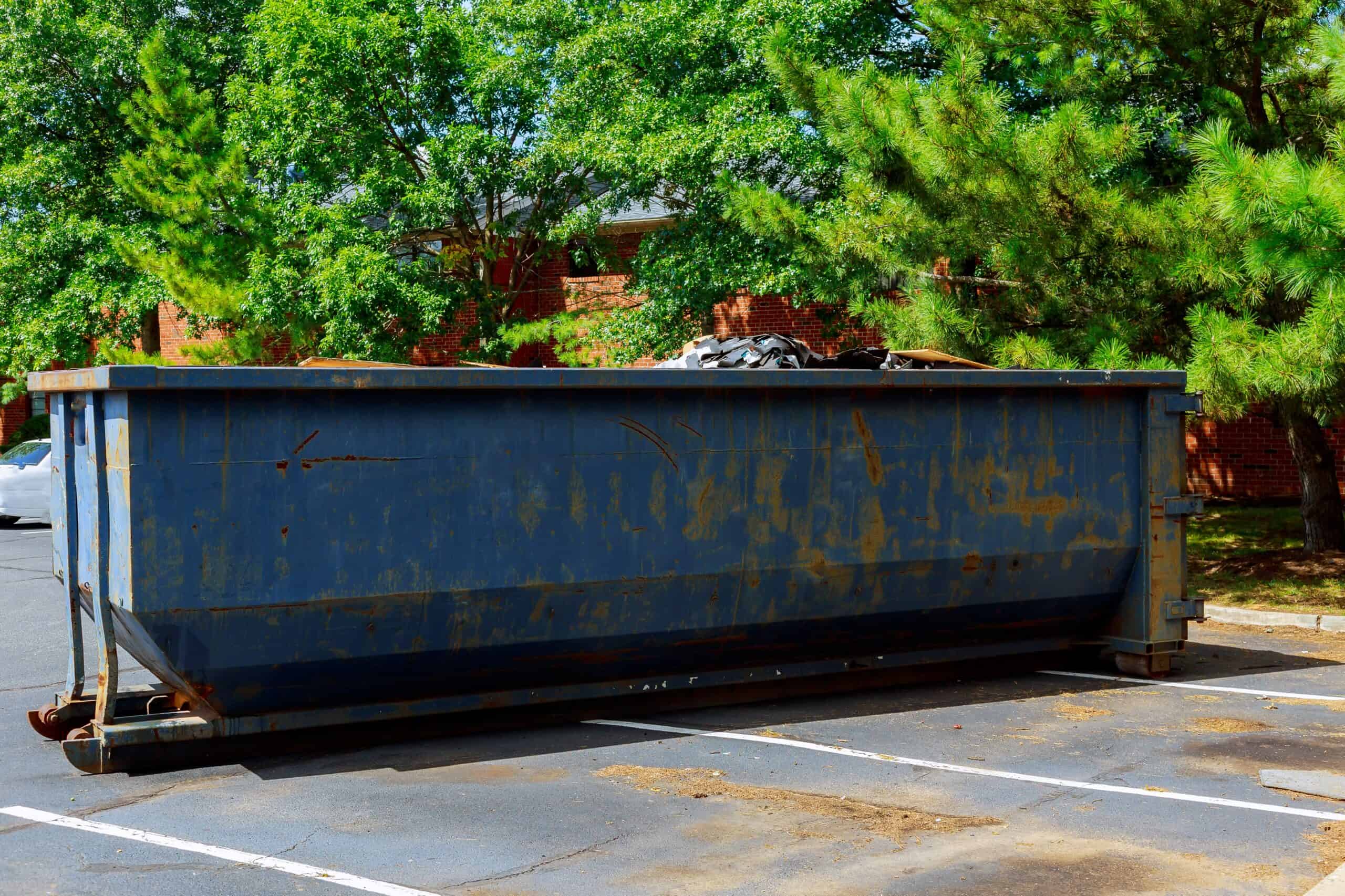
A 20-yard roll-off measures 22 feet long, 8 feet wide, and 4 feet high. A 30-yard roll-off measures 22 feet long, 8 feet wide, and 6 feet high. Read those twice and the useful part jumps out: the length and the width are identical. The only dimension that changes between our two sizes is height.
| Container | Length | Width | Height | Holds up to | Flat rate from |
|---|---|---|---|---|---|
| 20-yard roll-off | 22 ft | 8 ft | 4 ft | 8 pickup truck loads | $335 |
| 30-yard roll-off | 22 ft | 8 ft | 6 ft | 12 pickup truck loads | $355 |
Both rates include 14 days on site. Extra days run $5 per day, and trucks are weighed at the landfill with excess weight billed at $43 per ton. If you are weighing capacity rather than footprint, our breakdown of choosing between the 20 and the 30-yard covers that side of it.
How Much Space You Actually Need
We ask for a clear placement area of at least 15 feet long and 10 feet wide, on a surface that can bear the weight of a loaded container. That is the minimum working area. The container itself is 22 feet long, so the practical instruction is to measure the full 22-foot run where it will actually sit, and then make sure the truck has a straight approach to that run.
If those two numbers feel like they are in tension, do not guess your way through it. Measure your space, write the numbers down, and call us before you book. We would far rather talk through a tight driveway on the phone than send a truck that cannot place the container when it gets there.
The other thing to account for is the approach. A roll-off truck does not drop a container sideways or swing it into position. It backs in and rolls the container off the rear, which means it needs a reasonably straight line to the spot. A perfect 22-foot gap that can only be reached by a sharp turn between two parked cars is not a usable spot.
Vertical Clearance Matters More Than People Expect
The container tilts up as it comes off the truck, so the height you need overhead is considerably more than the 4 or 6 feet the container stands once it is down. This is the single most common thing people forget when they measure, because nobody instinctively looks up at a driveway they have parked in for years.
- Low tree branches, which are easy to miss in winter and impossible to miss in July.
- Roof eaves and garage door overhangs on a tight driveway.
- Basketball hoops, which sit at exactly the wrong height.
- Service drops and any other wire running to the house.
Power lines are their own category and are not something to eyeball. MidAmerican Energy tells people to stay at least 35 feet away from overhead power lines and downed wires, and their guidance on overhead power line safety is worth two minutes of your time if a line runs anywhere near your intended spot. If there is any doubt at all, pick a different spot or call us and we will work it out.
What the Container Sits On
The surface has to be able to carry the weight of a loaded container, which is a different question from whether it can carry an empty one. We place protective boards under the container before it comes to rest, and that is standard on every delivery, not something you have to ask for.
Beyond that, use your judgement about your own property and tell us what you know. Soft ground after a wet week, a driveway you already have concerns about, or a spot that sits over something buried are all worth mentioning when you book rather than when the truck is in the street. We can usually work with the information. We cannot work with information we do not have.
Does the Bigger Container Need More Room?
On the ground, no. Both containers are 22 feet by 8 feet, so if the 20-yard fits your driveway then the 30-yard fits the exact same spot. Sizing up costs you $20, not driveway. That surprises a lot of people who assume the bigger number means a bigger footprint.
Where the extra two feet of height does matter is loading. On a 20-yard you are lifting things over a 4-foot wall. On a 30-yard it is a 6-foot wall, which is a real difference when you are handling a heavy dresser or a section of countertop by hand, and everything goes in by hand rather than with machinery. If most of your load is bulky but light, the taller container is easy to fill and worth it. If it is heavy and awkward, the lower wall on the 20-yard is genuinely easier on your back.
Local note: If the container has to sit on a public street or sidewalk rather than your own property, a local permit may be required, and those rules differ from one Cedar Valley city to the next. Check with your city offices before you plan around a street placement.
How to Measure Your Space in Five Minutes
You do not need anything but a tape measure and a few minutes outside.
- Measure 22 feet along the spot where you want the container and mark both ends.
- Measure 8 feet across and check what is immediately beside that width on both sides.
- Stand at the spot and look straight up. Note every branch, wire, and overhang.
- Walk the route the truck will take from the street to the spot, looking for tight turns and pinch points.
- Check the surface along that whole route, not just at the drop point.
Write those numbers down before you call. It turns a vague conversation into a thirty-second one. Our guide on how to prepare for dumpster delivery covers what to do with the spot once you have confirmed it works.
When Your Space Will Not Work
Sometimes the measurements simply do not add up, and it is better to know that now. There are usually three ways forward, and none of them involve hoping it works out on delivery day.
- A different spot on the property. Side yards, back drives, and alley access often work when the main driveway does not.
- Street placement. Possible in many cases, but check your city’s permit rules first, since they vary.
- A different plan for the load. If nothing on the property works, tell us what you are clearing and we will talk through the options honestly.
If you want a sense of how much you can actually get into the taller container before you commit the space, our rundown of what fits in a 30-yard dumpster is the practical companion to this one, and our FAQs page covers the rest of the common questions.
Key Takeaways
- A 20-yard is 22 by 8 by 4 feet. A 30-yard is 22 by 8 by 6 feet.
- Both sizes share the same ground footprint, so sizing up costs no extra space.
- The minimum clear placement area is 15 feet by 10 feet on a weight-bearing surface.
- Measure the full 22-foot run where the container will sit, not just the minimum.
- Overhead clearance is the most commonly missed measurement, so look up before you book.
- The truck backs in and rolls the container off the rear, so it needs a straight approach.
Dumpster Dimensions FAQs
What are the dimensions of a 20 yard dumpster?
A 20-yard roll-off measures 22 feet long, 8 feet wide, and 4 feet high. It holds up to 8 pickup truck loads and starts at a flat $335 with 14 days included.
What are the dimensions of a 30 yard dumpster?
A 30-yard roll-off measures 22 feet long, 8 feet wide, and 6 feet high. It holds up to 12 pickup truck loads and starts at a flat $355 with 14 days included.
Do both sizes take up the same amount of driveway?
Yes. Both containers are 22 feet long and 8 feet wide, so the ground footprint is identical. The only dimensional difference is height, 4 feet on the 20-yard and 6 feet on the 30-yard.
How much space do I need for a dumpster?
We ask for a clear placement area of at least 15 feet long and 10 feet wide on a surface that can bear the weight. Since the container itself is 22 feet long, measure the full run where it will sit and call us if your space is tight.
How much overhead clearance does the truck need?
More than the height of the container, because the truck tilts it as it rolls off. Branches, eaves, basketball hoops, and wires all matter. Never plan a placement under a power line, and check with your utility if a line runs anywhere near the spot.
What surface can the dumpster sit on?
Any surface that can bear the weight of a loaded container. We place protective boards underneath before it comes to rest. If you are unsure whether your surface will hold up, tell us when you book and we will talk through the spot.
Can the dumpster go on the street?
Sometimes, but street or sidewalk placement may require a local permit and those rules vary by city. Check with your city offices before you plan on it. On your own driveway or private property you typically need nothing.
Do I need to be there when it is delivered?
No. As long as the space is clear and you have left placement instructions, including which way you want the doors to face, our driver can set the container without you there.
Measured your spot and still not sure? Call (319) 406-0043 with your numbers and we will tell you straight away whether it works. You can also reach us through our contact page or at [email protected].