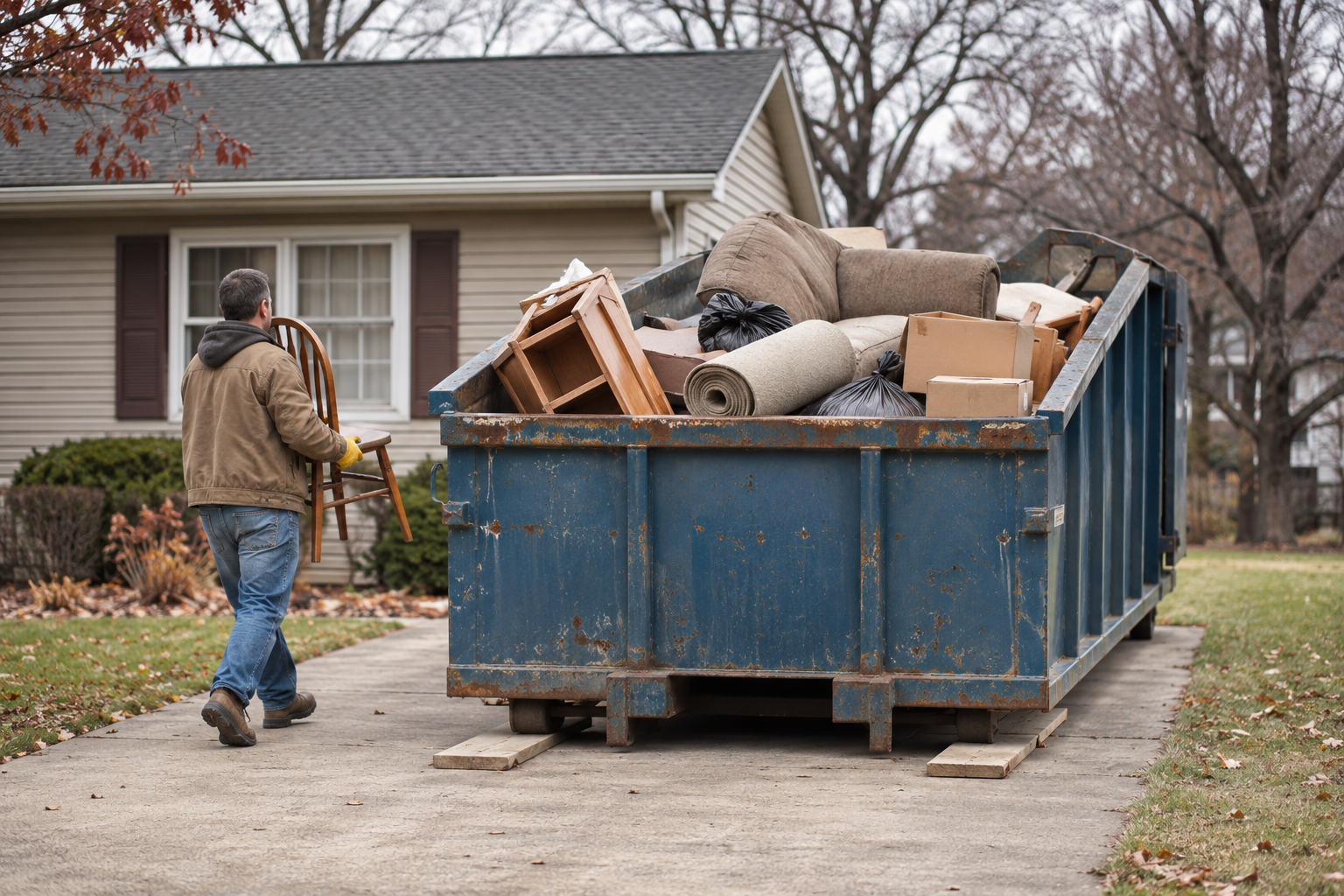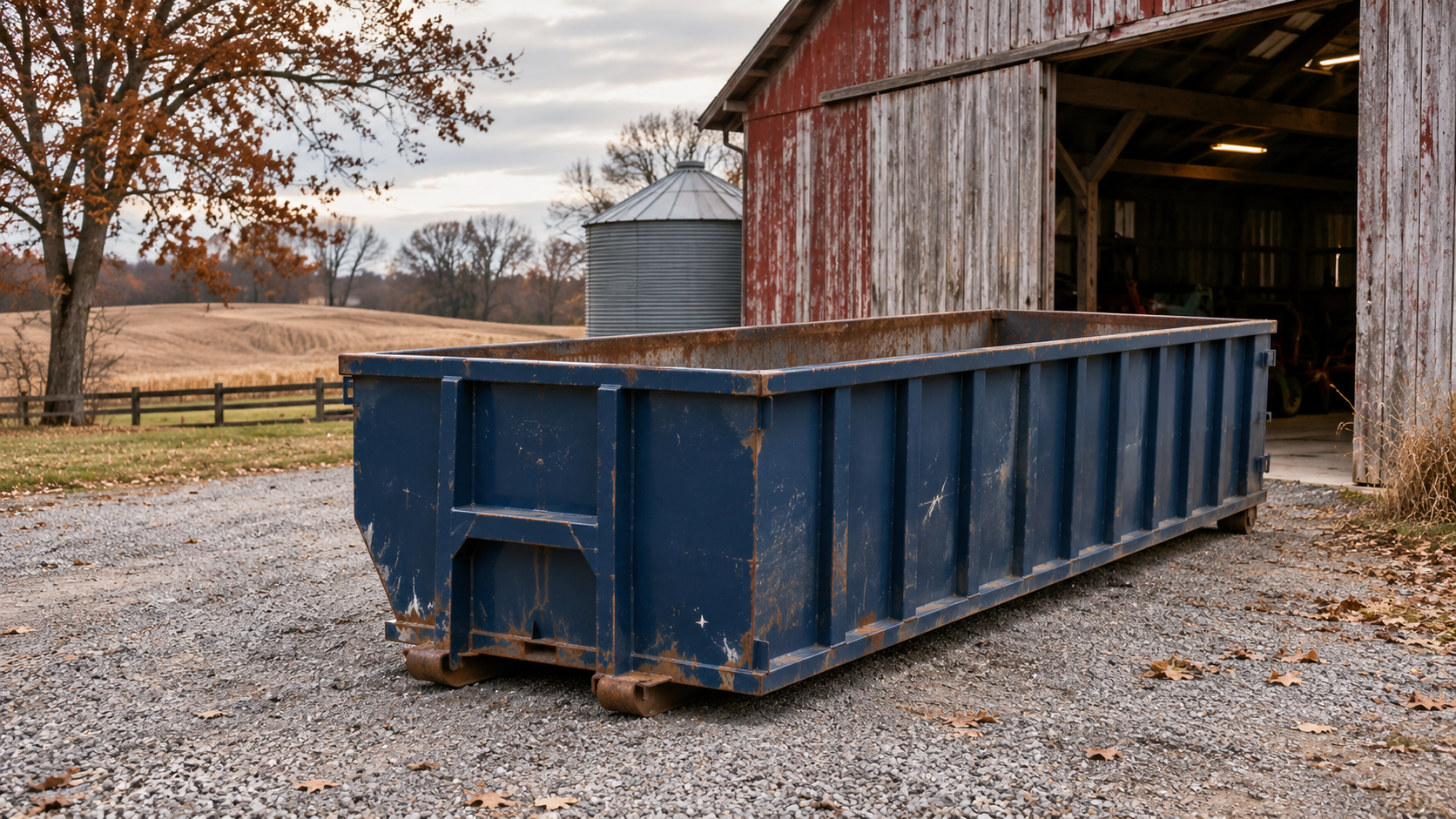
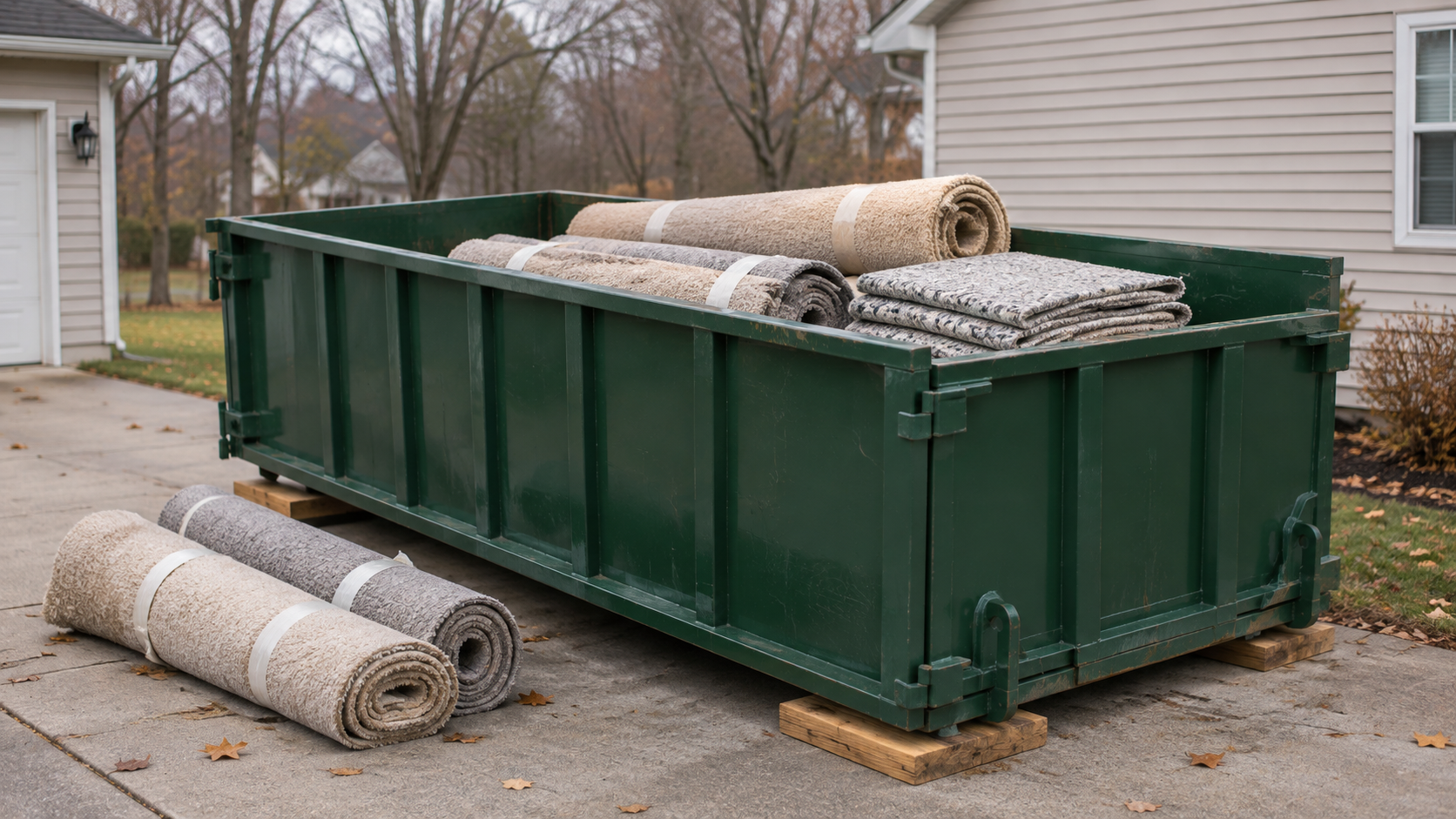
Winter is when a lot of Cedar Valley homeowners finally pull up the old carpet. The work moves indoors and the old carpet has had its last season. What catches most people off guard is the pile it leaves behind: long rolls of carpet, crumbling pad, strips of tack strip full of nails, and sometimes boxes of old tile or laminate.
3D Solutions is a roll-off dumpster rental company based in Denver, Iowa, operating out of a Waterloo yard and serving the Cedar Valley. This guide covers which flooring materials can go in a rental container, which ones need a call first, and how to cut and load them so you get the most out of the space. If you want to see the size and flat rate before you start, take a look at our 20-yard roll-off dumpster.
Can You Put Carpet and Padding in a Dumpster?
Yes. Carpet and carpet padding are renovation debris, and construction debris is on the list of accepted materials for a 3D Solutions roll-off container. Both can go in the same dumpster as the rest of your remodel waste.
The real question with carpet is not whether it is allowed but how it is packed. Carpet is bulky for its weight, and padding is light and springy, so both eat up container space quickly when they are thrown in loose. A few minutes of rolling and taping saves real room.
A typical carpet tear-out produces more than just carpet. Plan for all of these to go in together:
- The carpet itself, cut into strips and rolled
- Foam or rubber padding, which is usually stapled to the subfloor
- Tack strip from around the edges of the room
- Metal or wood transition strips at doorways
One thing to watch: if the carpet came out of a damp basement, let it drain and dry as much as you can before it goes in. Water adds weight, and weight is billed at $43 per ton based on the landfill weigh ticket.
Which Flooring Types Can Go In, and Which Need a Call First?
Carpet, carpet pad, tack strip, laminate, vinyl plank, and hardwood can all go in as construction debris. Ceramic tile needs a quick call first, especially if it is set in a mortar bed, because concrete is prohibited. Old vinyl or asphalt tile should not go in at all until it has been tested for asbestos.
| Flooring type | Goes in the dumpster? | Note |
|---|---|---|
| Carpet | Yes | Accepted as construction debris. Cut into strips, roll tightly, and tape. |
| Carpet pad | Yes | Light but bulky. Roll or fold it and bundle it so it does not spring open. |
| Tack strip | Yes | Nails point up. Bundle strips with the nails facing inward and wear gloves. |
| Laminate | Yes | Stack planks flat instead of tossing them in loose. |
| Vinyl plank | Yes | Stacks flat like laminate. Box up short offcuts. |
| Hardwood | Yes | Bend over or pull exposed nails where you can. Consider reuse if boards are in good shape. |
| Ceramic tile | Confirm at booking | Heavy for its size. Tile set in a mortar bed brings up concrete-like material, and concrete is prohibited. |
| Old vinyl or asphalt tile | Not until tested | May contain asbestos, which is prohibited. Test before removal. |
The tile row deserves a closer look. Some older bathrooms and entryways, though, have tile laid on a thick bed of mortar. When that floor comes out, it breaks into heavy chunks that behave a lot like concrete.
Concrete, dirt, and bricks are prohibited in a 3D Solutions dumpster. If a load contains them and the truck cannot haul it, the customer has to empty the container and may face extra charges. That is why tile is a “describe it when you book” item. Put the tile and what it is set in into the debris description at checkout, and if you are not sure, call before delivery so it can be confirmed.
How Much Space Does a Whole-House Carpet Tear-Out Take?
More than most people expect, because rolled carpet and pad are bulky even when they are not especially heavy. The easiest way to plan is in pickup truck loads: a 20-yard dumpster holds up to 8 pickup truck loads, and a 30-yard holds up to 12. Estimate how many loads your flooring and any other remodel debris would fill, then pick the size that leaves some room to spare.
Both containers share the same footprint. The 20-yard measures 22 x 8 x 4 ft and starts at a flat rate of $335. The 30-yard measures 22 x 8 x 6 ft and starts at a flat rate of $355. The extra height is what gives the 30-yard more room. Tax is added at checkout.
A few things push your estimate up or down:
- How many rooms and stairs. Stair runners and hallways add a lot of short, awkward pieces.
- Pad thickness. Thick pad takes far more room than thin pad unless you compress it.
- Subfloor work. If damaged subfloor panels are coming up too, they add both bulk and weight.
- Other demo. Cabinets, drywall, and trim from the same remodel share the container.
Space and weight are two separate questions. Carpet tends to fill a container by volume, while tile and hardwood add weight fast in a small pile. If your job mixes them, read our guide on how to estimate dumpster weight before you pick a size. If flooring is just one piece of a larger remodel, our post on the best dumpsters for renovation debris walks through sizing for the whole project.
How Do You Cut and Roll Carpet So It Loads Well?
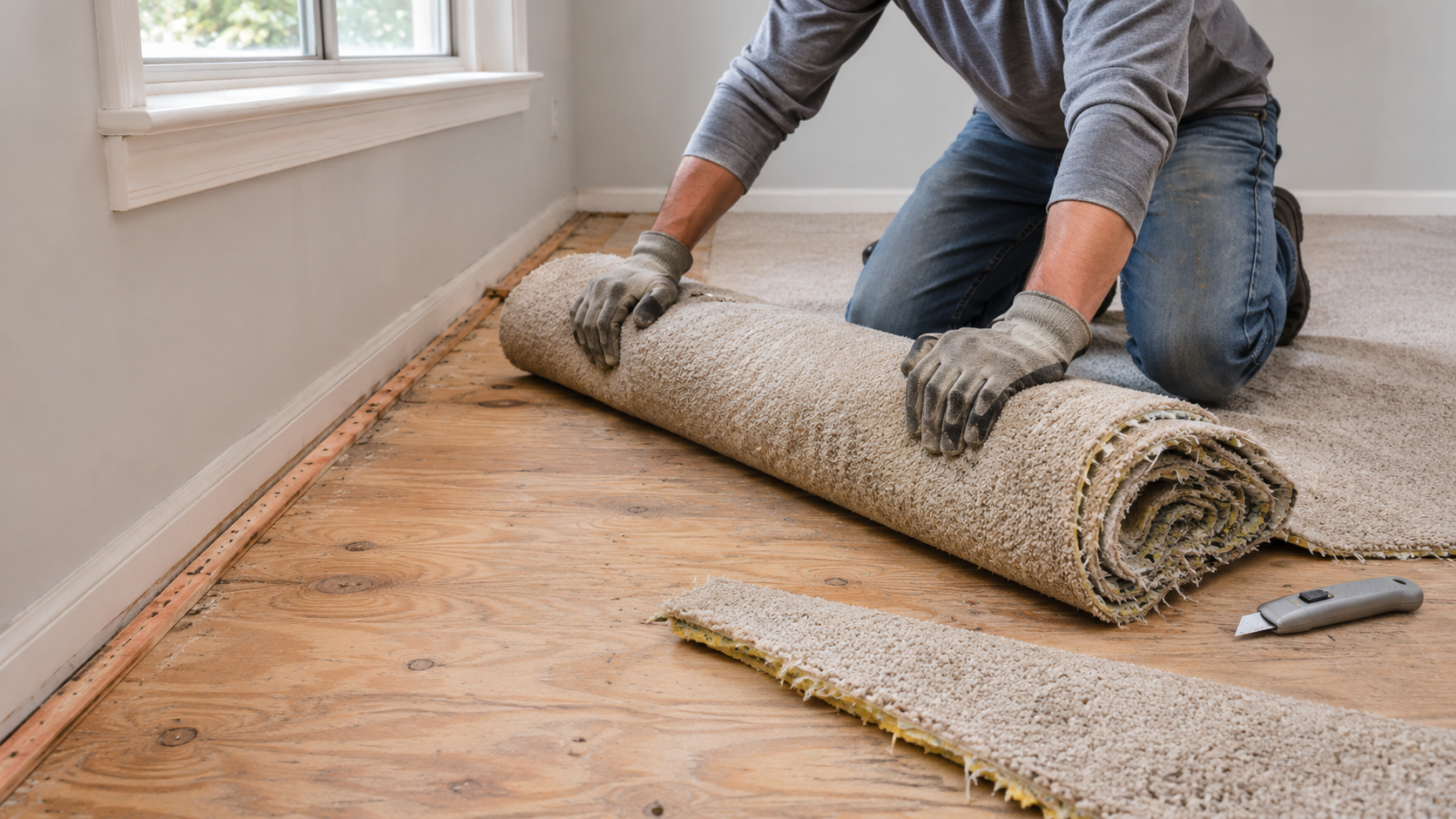
Cut the carpet into strips narrow enough for one person to carry, roll each strip tightly, and tape it. Tight, taped rolls lie flat along the length of the container and leave far less empty space than loose, folded carpet. Do the same with the pad, and bundle the tack strip separately.
A simple order of work for each room:
- Clear the room and remove any metal or wood transition strips at the doorway.
- Grab a corner of the carpet with pliers and pull it up off the tack strip.
- Fold the carpet back and cut it into strips from the back side with a utility knife. Change blades often, because a dull blade makes the job much harder.
- Roll each strip as tightly as you can and wrap it with duct tape in two or three places.
- Pull up the pad, roll or fold it, and tape or tie it into bundles.
- Pry up the tack strip, stack the pieces with the nails facing each other, and tape the bundle.
- Pull or flatten leftover staples so the subfloor is ready for the new floor.
When you load, lay carpet rolls flat on the floor of the container, running the long way. Put heavier items such as bundled hardwood or boxed tile toward the bottom, then use pad bundles to fill the gaps. Loading is by hand only, with no machinery. Our guide on how to load a dumpster covers stacking order and keeping the load even.
What About Old Vinyl Tile and Asbestos?
Treat old vinyl and asphalt floor tile as a possible asbestos risk until it has been tested. Asbestos is on the prohibited list for a 3D Solutions dumpster, so asbestos-containing flooring cannot go in the container. Test before you start pulling, because breaking, scraping, or sanding the tile is what can release fibers.
You cannot tell by looking. Old floor tile, the dark adhesive underneath it, and the backing on some older sheet vinyl can all contain asbestos, and only a lab test gives you a real answer. If you find small square tiles under carpet in an older home, stop and get a sample tested before you go any further.
If the test comes back positive, that flooring needs special handling and has to stay out of your rental dumpster. The rest of the job, such as the carpet and pad on top, can still go in once it is separated. Ask a licensed abatement contractor about removal, and check with your county’s solid waste office about how asbestos-containing material is accepted where you live.
Local note: In Black Hawk County, the local solid waste agency treats asbestos-containing materials as special waste that needs specific handling. Rules and contacts differ from county to county, so confirm with your own county before you schedule removal.
Can Good-Condition Flooring Be Reused Instead?
Often, yes, and reusing it keeps both bulk and weight out of your dumpster. Unopened boxes of laminate, vinyl plank, or tile, and solid hardwood in decent shape, may be worth donating instead of tossing. Worn carpet is usually a disposal item, but leftover materials from the new install are good candidates.
In Black Hawk County, the local waste agency points residents to the Habitat for Humanity ReStore, which takes donated building materials including flooring. What a store accepts can change, so call your nearest ReStore before you load up the truck. Outside Black Hawk County, check with your county or a local reuse store for similar options.
Key Takeaways
- Tape every carpet roll. Loose, folded carpet wastes container space fast.
- Bundle tack strip with the nails facing inward and handle it with gloves.
- Plan size in pickup truck loads, and count every room, stair, and subfloor panel.
- Let wet carpet dry before loading, since water adds billable weight.
- Set aside unopened boxes and good hardwood for reuse before demo begins.
Carpet and Flooring Dumpster FAQs
Do I need to be home when the dumpster is delivered for a flooring job?
No, you do not need to be home if the placement spot is clear and you leave delivery instructions. Deliveries arrive within an 8 AM to 8 PM window, so it helps to mark the spot before the day starts.
How fast can I get a dumpster for a carpet tear-out?
Delivery is typically within 24 to 48 hours of booking. Same-day delivery is sometimes available, depending on your location and demand that day.
Can I keep the dumpster while the new flooring goes in?
Yes, the rental includes 14 days, and the delivery day counts as day 1. If the install runs long, extra days are $15 per day for both the 20-yard and the 30-yard.
What happens if the dumpster fills up before the tear-out is finished?
You can request a swap-out during the rental, where the full container is hauled away and an empty one is dropped off. Call to schedule it as soon as you see the container getting full.
Can leftover floor adhesive, stain, or finish go in with the flooring?
No, liquids, chemicals, and paint are prohibited, and that includes cans of adhesive, stain, and floor finish. Disposal options for these vary by county, so check with your county’s household hazardous waste program.
Can an old dishwasher or range from the kitchen go in with the flooring debris?
Appliances can be arranged, but each one carries a $75 surcharge. Refrigerators, freezers, and other refrigerant appliances have no stated policy, so confirm how they are handled when you book.
Do I need a permit to keep a dumpster during a flooring project?
A dumpster on your own driveway or private property typically does not need a permit. Placing it on a public street or sidewalk may require one, and the rules vary by city, so check with your city before delivery.
Planning a flooring tear-out this winter? Book your roll-off dumpster online, or call 3D Solutions at (319) 406-0043 with questions about tile, mortar, or anything else on your list.