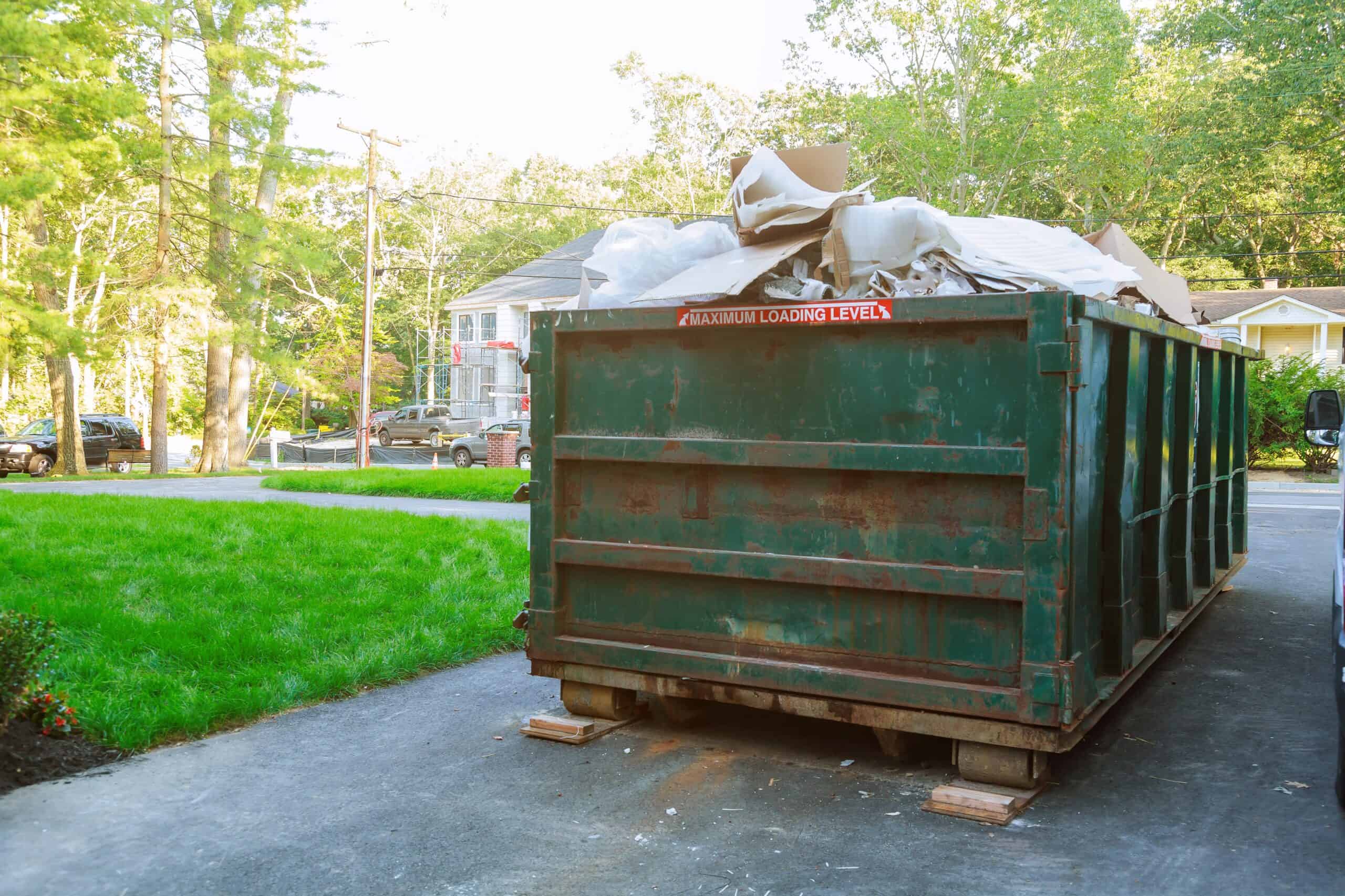
Will a dumpster damage your driveway? In most cases no, and the longer honest answer is that the risk concentrates in a few specific conditions you can actually do something about. It is the question that stops more people from booking than price does, so it is worth answering properly rather than with a reassuring shrug. If you already know your surface is solid, you can go straight to reserving a 20-yard roll-off.
3D Solutions is based in Denver, Iowa and runs its containers out of a yard in Waterloo, so we set these down in Cedar Valley driveways every week of the year. What follows is what actually matters, what we do about it on our end, and where the responsibility sits if something does go wrong.
Will a Dumpster Damage Your Driveway?
For most driveways in sound condition, no. Protective boards go down under every container before it comes to rest, which spreads the load rather than concentrating it at the contact points. That is standard on every delivery and not something you have to request.
What we will not do is tell you the risk is zero, because no honest hauler can say that about every surface in every condition. Three things drive it: whether your surface can carry the weight of a loaded container, how hot the asphalt is if you have asphalt, and whether anyone tries to load with a machine. Get those three right and you are in good shape.
The Protective Boards Go Down Every Time
Every container we place gets protective boards underneath it. The job of those boards is simple: take the weight that would otherwise press through a small number of contact points and spread it across a wider area of your driveway.
You are welcome to lay your own plywood on top of that if you want extra reassurance, and some people do on a newly sealed driveway. It is not required and it does not change what we do. If you are going to, have it down before the truck arrives rather than trying to slide anything underneath afterward.
Can Your Surface Carry a Loaded Container?
This is the real question, and it is about the loaded container rather than the empty one. We ask for a placement area on a surface that can bear the weight, and an empty container arriving is a very different thing from a full one sitting there for two weeks.
What drives that weight is what you put in. A container of furniture, boxes, and general household clearing is comparatively light for its volume. The same container filled with plaster, shingles, or wet carpet is a completely different load. Trucks are weighed at the landfill and excess weight is billed at $43 per ton, so the material that costs you the most in weight is also the material that puts the most on your driveway. Those two things move together, which makes it easy to remember.
If your driveway already has cracking, crumbling edges, or a soft patch you have been meaning to deal with, say so when you book. We would rather choose the spot with you than find out afterward.
Asphalt in Hot Weather
Asphalt is the surface most worth thinking about in midsummer, because it softens as it heats and pavement runs a lot hotter than the air above it. UGA Cooperative Extension measured blacktop at around 140 degrees on a 95-degree day in its look at how hot pavement gets in summer. Numbers vary by region, surface, and shade, so treat that as illustration rather than a figure for your driveway.
The practical point holds for Iowa all the same. A heavy static load sitting on softened asphalt through a hot stretch is more likely to leave an impression than the same load in April. That does not mean asphalt is off limits, and we place on asphalt constantly. It means that if you are booking during a hot week and your driveway is blacktop, mention it when you call so we can factor it in.
Hand Loading Only, and Why That Protects Your Driveway
Containers are loaded by hand, not with machinery. That rule exists for a few reasons and one of them is your driveway. Damage rarely comes from a container sitting still. It comes from equipment.
A skid steer or mini excavator working alongside a container puts concentrated wheel or track loads on the driveway, turns on the spot, and can shove or drop material against the container hard enough to move it. That combination is what wrecks driveways, and it is also how containers get damaged. Negligent damage is the customer’s responsibility, so this is not a rule we enforce for its own sake. It is the single easiest way for a job to turn expensive.
If your project genuinely cannot be done by hand, that is a conversation to have before delivery rather than a decision to make in the moment with a machine already on site.
Where the Risk Actually Concentrates
Will a dumpster damage your driveway? The risk is not spread evenly across every job. It clusters, and once you see where, the whole thing becomes manageable.
| Factor | What raises the risk | What lowers it |
|---|---|---|
| Surface condition | Existing cracks, crumbling edges, soft patches | Sound surface, and telling us about problem areas |
| Weather | Asphalt during a hot stretch | Cooler conditions, or flagging it at booking |
| What you load | Dense material like plaster, shingles, wet carpet | Lighter household and bulky material |
| How you load | Any machinery near or over the container | Hand loading, which is the rule anyway |
| Ground beneath | Soft ground after a wet stretch | Firm, well-drained placement |
| Under the container | Nothing between steel and surface | Protective boards, placed on every delivery |
What You Can Do Before Delivery
Most of the protection happens before the truck ever shows up, and none of it takes long.
- Tell us your surface when you book. Concrete, asphalt, gravel, or grass all change the conversation.
- Point out any cracking, soft spots, or recent sealcoating rather than hoping we do not notice.
- Pick the most solid part of the driveway, not just the most convenient one.
- Lay your own plywood on top of our boards if you want the extra margin.
- Plan your heaviest material honestly, since weight is the thing that turns a non-issue into an issue.
- Make sure nobody shows up with a machine to speed up the loading.
Our walkthrough on how to prepare for dumpster delivery covers the rest of the pre-delivery checklist, including clearance and access.
If You Would Rather Not Risk the Driveway
There is usually somewhere else to put it, and asking costs nothing. Grass or gravel can work as long as the surface can bear a loaded container and the truck can reach it, with soft ground after a wet stretch being the main thing to watch. Side yards, back drives, and alley access are all worth mentioning.
Local note: Street or sidewalk placement keeps the container off your driveway entirely, but it may require a local permit and those rules differ from one Cedar Valley city to the next. Check with your city offices before you plan around it.
For most household projects this is a smaller worry than people expect once the spot is chosen properly. Our residential dumpster rental page covers the household side, and if you are clearing a whole house our guide to the best dumpster for a home cleanout will help you size it before you worry about where it sits.
Key Takeaways
- Protective boards go under every container on every delivery, without being asked.
- The surface has to carry a loaded container, not just an empty one.
- Weight comes from what you load, so dense material raises both your tonnage and your risk.
- Asphalt softens in hot weather, so flag a blacktop driveway if you are booking in midsummer.
- Loading is by hand only, and negligent damage is the customer’s responsibility.
- Both container sizes share the same 22 by 8 foot footprint, so sizing up does not increase contact area.
Driveway Protection FAQs
Will a dumpster crack my concrete driveway?
It is unlikely on sound concrete in good condition. We place protective boards under every container to spread the load, and concrete generally handles a static load well. If your driveway already has cracking or soft spots, tell us when you book and we will talk through the placement.
Do you put anything under the dumpster?
Yes. Protective boards go down under the container before it comes to rest, on every delivery. You do not need to ask for them or supply your own, though you are welcome to lay extra plywood if you want more peace of mind.
Is asphalt riskier than concrete?
In hot weather, generally yes. Asphalt softens as it heats and pavement runs much hotter than the air temperature, so a heavy static load is more likely to leave an impression in midsummer than in spring. If you are placing on asphalt during a hot stretch, mention it when you book.
Who is responsible if my driveway is damaged?
It depends on the cause. Containers are loaded by hand and not with machinery, and damage caused by negligent loading is the customer’s responsibility. If you have concerns about your surface before delivery, raise them at booking so we can choose the spot together.
Can I put plywood down myself?
Yes, and some people do for extra reassurance on a newer or recently sealed driveway. We already place protective boards, so it is not required. If you plan to lay your own, have it down before the truck arrives.
Does the container size change the risk?
Not the footprint. Both sizes are 22 feet by 8 feet, so the contact area is identical. What changes the load is what you put inside, and a container of dense material like plaster or shingles weighs far more than the same container of furniture.
Can the dumpster go on grass or gravel instead?
Sometimes, as long as the surface can bear the weight of a loaded container and the truck can reach it. Soft ground after a wet stretch is the main thing to watch. Describe the spot when you call and we will give you an honest answer.
What if I do not want it on my property at all?
Street or sidewalk placement is sometimes an option, but it may require a local permit and those rules vary by city. Check with your city offices first. On your own driveway or private property you typically need nothing.
Worried about a particular driveway? Describe it to us before you book and we will tell you honestly what we think. Call (319) 406-0043, reach us through our contact page, or email [email protected].