A rental dumpster can take a lot more than many people expect, but it still has clear limits.
If you are planning a garage cleanout in Denver, replacing a roof in Waverly, updating a rental in Waterloo, or managing a jobsite in Cedar Falls, the basic rule is simple: general junk and standard construction debris usually belong in the dumpster, while hazardous or heavily regulated materials usually do not.
That distinction matters for safety, landfill rules, and cost. It also saves time. A project moves faster when you know what can be tossed right away and what needs a separate drop-off plan.
What household junk and construction debris can go in a rental dumpster
Most trash dumpster rental projects in the Cedar Valley fall into two broad categories: cleanouts and construction work. Both are usually a good fit for a roll-off dumpster.
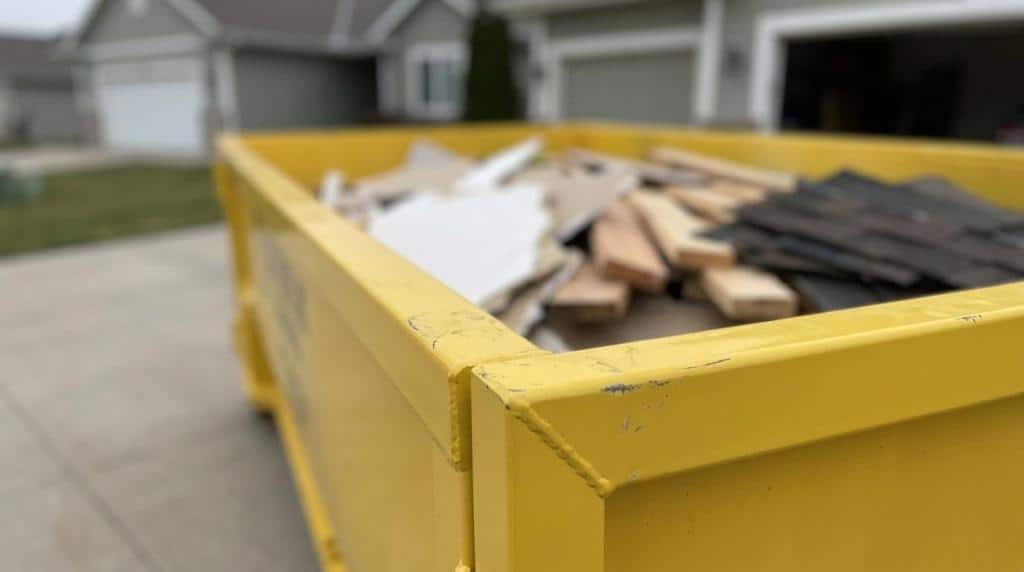
For everyday cleanup, common accepted items often include furniture, household junk, toys, shelving, clothing, bagged trash, and non-hazardous clutter from basements, attics, sheds, and garages. For remodeling and building work, accepted debris often includes drywall, lumber, siding, flooring, cabinetry, roofing materials, and similar jobsite waste.
3D Solutions states that its dumpsters accept most household junk, furniture, construction debris, roofing materials, mattresses, and electronics. That covers a wide range of projects for homeowners, contractors, property managers, and local businesses.
Here are some common examples of materials that are usually fine in a rental dumpster:
- Old couches and chairs
- Boxed household clutter
- Drywall and trim
- Lumber and plywood
- Roofing shingles
- Cabinets and countertops
- Mattresses
- General renovation debris
That said, “usually fine” is not the same as “always fine.” Every dumpster company has item restrictions, and some materials trigger extra handling fees even when they are accepted.
Common accepted and prohibited dumpster rental items
The easiest way to think about dumpster loading is to separate waste into three groups: accepted materials, restricted materials, and prohibited materials.
For many projects around Bremer County and Black Hawk County, this quick reference is enough to prevent a costly reload or a pickup delay.
| Material category | Typical status | Notes |
|---|---|---|
| Household junk | Accepted | Bagged or loose non-hazardous items are usually fine |
| Furniture | Accepted | Sofas, chairs, tables, dressers, and similar items are commonly allowed |
| Construction debris | Accepted | Drywall, wood, flooring, and demolition debris are common dumpster materials |
| Roofing materials | Accepted | Good fit for tear-offs and repair projects |
| Mattresses | Accepted | Check ahead in case handling rules change |
| Electronics | Often accepted | Confirm details before loading |
| Appliances | Accepted with surcharge | 3D Solutions notes a $75 surcharge per item |
| Light fixtures | Accepted with surcharge | 3D Solutions notes a $75 surcharge per item |
| LED bulbs | Accepted with surcharge | 3D Solutions notes a $75 surcharge per item |
| Liquids | Prohibited | Never place liquid waste in a dumpster |
| Paint | Prohibited if wet or liquid | Use local disposal options instead |
| Chemicals | Prohibited | Includes many cleaning, automotive, and workshop products |
| Batteries | Prohibited | Handle through approved recycling or hazardous waste channels |
| Tires | Prohibited | Whole tires are commonly restricted from landfill disposal |
| Concrete | Prohibited by 3D Solutions | Heavy inert material often requires a separate disposal plan |
| Dirt | Prohibited by 3D Solutions | Weight and disposal rules matter |
| Bricks | Prohibited by 3D Solutions | Like concrete, these often require specialty handling |
A quick call before delivery is always smart if your load includes items outside standard household junk or dry construction debris.
Why hazardous materials cannot go in a rental dumpster
The biggest source of confusion is household hazardous waste. The EPA uses that term for leftover household products that can catch fire, react, explode, corrode, or release toxic substances. That is why common items from a garage shelf or utility room can be far more serious than they look.
Wet paint, solvents, pesticides, pool chemicals, gasoline, motor oil, and many cleaners fall into that category. Tossing them into a dumpster can create fire risk, leaks during transport, or contamination at the landfill.
Federal waste rules under RCRA exist to protect people and the environment from unsafe disposal practices. While most homeowners will not read waste regulations before a weekend cleanup, they still feel the effect of those rules every time a dumpster company says “yes” to one item and “no” to another.
Many state and local agencies also divert or ban certain materials from ordinary trash disposal. Batteries, fluorescent lamps, electronics, and whole tires often end up on those restricted lists. The exact rules vary by location, which is why Iowa residents should check county or city disposal options for anything questionable.
Surprising items that may need special handling in a trash dumpster rental
Some items are not fully banned, but they are not treated like ordinary debris either.
This catches people off guard during estate cleanouts, rental turnovers, and remodels. A refrigerator pulled from a Waterloo duplex or a stack of old fixtures from a Cedar Falls office refresh may seem like standard trash, yet those materials may need special processing.
3D Solutions notes that appliances, light fixtures, and LED bulbs are accepted but subject to a $75 surcharge per item. That is a useful detail to know before you start loading, especially if your project includes several units at once.
A few items worth checking before pickup day include:
- Appliances: Often accepted with an added fee because they require separate handling.
- Light fixtures: These may include components that need sorting before disposal.
- LED bulbs: Accepted by 3D Solutions with a surcharge, so count them before booking.
- Electronics: Often accepted, but confirm the current policy and volume limits.
- Mattresses: Usually allowed, though some sites treat them differently than ordinary trash.
That kind of planning is especially helpful for landlords and property managers working on tighter turnover schedules.
How to sort debris before your dumpster arrives
A better dumpster rental experience starts before the container hits the driveway.
Set aside twenty minutes and make three piles: accepted debris, questionable items, and prohibited materials. This simple step helps avoid the last-minute scramble when the dumpster is already on site and workers are ready to move.
The accepted pile should contain dry, non-hazardous waste from your cleanout or jobsite. The questionable pile is for electronics, appliances, fixtures, bulbs, or any item that may carry a fee or limit. The prohibited pile should include liquids, chemicals, batteries, tires, paint, concrete, dirt, and bricks if you are renting from 3D Solutions.
A short pre-sorting routine works well:
- Bag loose trash
- Stack lumber flat
- Keep prohibited items off to the side
- Count surcharge items before booking
- Break down bulky furniture when possible
- Leave room below the top edge of the dumpster
That last point matters more than people expect. Overfilling a roll-off can delay pickup because debris cannot safely extend above the container walls.
Local dumpster rental tips for Denver, Waterloo, Cedar Falls, and Waverly projects
Projects in northeast Iowa have their own rhythm. Spring storms, summer roofing work, fall cleanouts, and winter property turnovers all create different waste streams. A roofing crew in Waverly may load shingles and underlayment all day, while a homeowner in Denver may fill the same size dumpster with furniture, shelving, carpet, and garage clutter.
That local mix is one reason clear rental terms matter. Flat-rate pricing, up to 14 days included, and fast delivery give people room to work at a steady pace instead of racing the clock. Same-day delivery can also be valuable when a contractor uncovers more debris than expected or a home sale timeline suddenly tightens.
Driveway protection matters too. Protective boards can help reduce surface damage, which is especially useful for residential placements in neighborhoods across Bremer County and Black Hawk County.
Local service also tends to make communication easier. When weather shifts, pickup timing changes, or a project scope grows, it helps to work with a company that regularly serves Denver, Waterloo, Cedar Falls, Waverly, and nearby towns.
When to call before loading prohibited or uncertain items
Some materials deserve a quick phone call before they ever leave the garage or job trailer.
That is true if the item is heavy, liquid, electrical, sharp, pressurized, or chemically treated. It is also true if you are not sure whether it belongs in a landfill stream or a recycling stream.
A quick check is wise when you have:
- Paint cans: Dry, empty cans may be treated differently than cans with wet paint inside.
- Batteries: Rechargeable, vehicle, and tool batteries should be handled through approved recycling channels.
- Tires: These are commonly restricted and should be taken to an approved tire collection point.
- Concrete or bricks: Heavy debris often needs a dedicated disposal option.
- Unknown chemicals: If the label is missing or damaged, keep the item out of the dumpster until you get guidance.
The EPA advises residents to contact local environmental, health, or solid waste agencies for household hazardous waste management options. That is practical advice for Iowa cleanouts too. If something can burn, corrode, leak, or poison, keep it separate until you know the right path.
For most projects, the rule stays refreshingly simple: if it looks like ordinary junk or standard construction debris, a dumpster is probably the right answer. If it is hazardous, liquid, unusually heavy, or specially regulated, make another plan for that part of the load.
When a project in Denver or the surrounding Cedar Valley needs a straightforward rental process, it helps to start with the accepted materials list, identify restricted items early, and ask questions before loading. That keeps pickup smooth, pricing clear, and the job moving. If you need help choosing a 20-yard or 30-yard dumpster, checking item restrictions, or arranging fast delivery, contacting 3D Solutions is a practical next step.