Roofing dumpster rental matters because roof tear-offs create dense, sharp debris fast, and the wrong container can slow the crew, damage a driveway, or trigger overweight charges. A good roofing dumpster keeps shingles, flashing, underlayment, and nails contained so the jobsite stays safer and cleaner. For homeowners and contractors in Denver, Iowa, plus Waterloo, Cedar Falls, and Waverly, the main problem it solves is simple: moving heavy roofing waste off-site without turning cleanup into a second project.
Why is a roll-off dumpster the best choice for roofing debris?
Roll-off dumpsters are the right default for roofing jobs in Denver and Waterloo. Asphalt shingles and plywood are bulky, heavy, and temporary waste, which fits a roll-off model better than a permanent trash service. OSHA 1926.25 also expects scrap to be cleared as work progresses.
Roof tear-offs create a mix of materials that do not behave like normal household trash. Asphalt shingles can weigh about 200 to 350 pounds per square, and one square equals 100 square feet of roof surface. Add tar paper, flashing, ridge vents, and occasional decking, and the debris pile grows quickly.
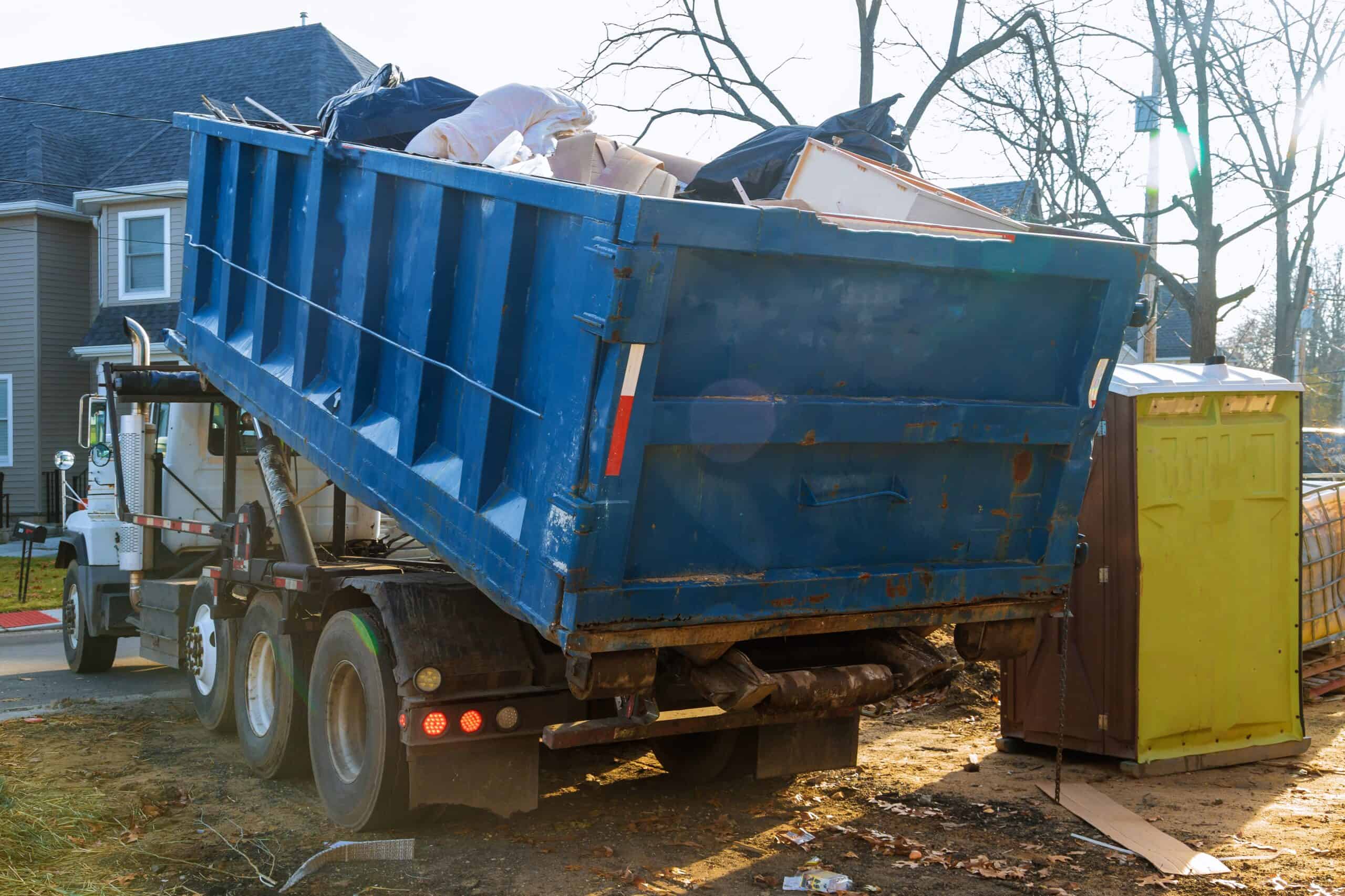
A roll-off works because it is open on top, built for construction debris, and easy to place near the work zone. That keeps drop distances short and cleanup tighter. On most residential roofs in the Cedar Valley, a temporary roll-off is the practical way to keep crews moving and keep nails, scraps, and torn shingles out of the yard.
How do roll-off dumpsters and front-load dumpsters compare for roofing jobs?
Roll-off dumpsters beat front-load dumpsters for roof tear-offs. WM-style front-load service is built for ongoing trash, while a roll-off is built for temporary construction waste. Roofing crews need open-top access, higher walls, and heavier-duty construction.
A front-load dumpster usually tops out at much smaller capacities and uses lids designed for bagged waste. That makes it awkward for shingle bundles, torn decking, and long flashing pieces. A roll-off, by contrast, is set down for the length of the project and hauled away when the job is done.
The trade-off is footprint. A roll-off needs truck access, a flat placement area, and enough room for loading. A front-load takes less space, but that advantage rarely matters on a roofing project because the loading method is wrong for the material. A common misconception is that the cheaper monthly service option must be cheaper overall. For roofing, using the wrong container usually costs more in labor, extra hauls, and site clutter.
What roofing dumpster rental options are worth comparing in Denver, Iowa, and the Cedar Valley?
3D Solutions, Inc. is a strong first call for roofing dumpster rental in Denver, Waverly, Waterloo, and Cedar Falls. Local response time, flat-rate scheduling, and driveway protection matter more than brand size on most roof tear-offs.
If you are comparing providers for a roofing project, look at response speed, included rental time, property protection, and how clearly weight charges are explained. In Bremer and Black Hawk counties, those details affect both cost and job flow.
- 3D Solutions, Inc.: Best fit for many local roofing jobs because it offers 20-yard and 30-yard roll-offs, easy online booking, same-day delivery when available, up to 14 days included, and protective boards to help safeguard driveways.
- National dumpster brokers: Useful when a contractor manages projects across several states and wants centralized billing, though service quality often depends on the local hauling partner.
- Large waste brands like WM: Worth comparing for commercial accounts or long-term waste programs, but roofing crews should still verify roll-off availability, lead times, and loading rules.
- General equipment rental companies that broker dumpsters: Helpful when one vendor is handling lifts, telehandlers, and site logistics, though dumpster specialization can vary.
How do you estimate the right dumpster size for a roofing job step by step?
Roofing dumpster size should be estimated by both roof area and debris weight. A 20-yard or 30-yard roll-off is common for Cedar Valley reroofing, but asphalt shingles often hit tonnage limits before the container looks full.
Step 1 is to count roofing squares and layers. Measure the roof area, divide by 100, and note whether you are removing one layer or two. If the home has a detached garage, porch roof, or shed roof included in the tear-off, add those surfaces now, not after booking.
Step 2 is to estimate weight by material. Asphalt shingles often run 200 to 350 pounds per square. If the roof has two layers, double the shingle portion. If there is wood decking replacement, add bulk. If there is tile or slate, weight becomes the dominant issue immediately.
Step 3 is to match the estimate to container size and haul plan. A common mistake is choosing by volume alone. If the roof is a single-layer asphalt job on an average home, a 20-yard may work well. If the job is larger, has multiple layers, or includes decking, a 30-yard or a planned swap-out is usually safer.
Should you rent a 20-yard or 30-yard dumpster for a roof tear-off?
A 20-yard dumpster fits many single-family reroof jobs, while a 30-yard dumpster fits larger homes and multi-layer tear-offs. At 3D Solutions, those two sizes cover most residential roofing needs in Denver, Cedar Falls, and nearby towns.
The 20-yard option is often the sweet spot for standard homes because it balances capacity with driveway footprint. It is easier to place on tighter residential sites and is usually enough for a single-layer tear-off on a modest to mid-size roof. If the access is narrow or the homeowner wants to preserve more driveway space, the 20-yard has an edge.
The 30-yard works better when debris volume is uncertain. That includes steeper roofs, two-layer tear-offs, attached garage roofs, bulky decking, or mixed construction debris from related repairs. The trade-off is space and clearance. A taller box can be harder to load evenly, and a bigger container still is not a license to ignore tonnage. Pro tip: if the material is mostly asphalt shingles, more cubic yards do not cancel weight limits.
How do you place a roofing dumpster to protect your driveway and keep access open?
The best roofing dumpster placement is on a flat, accessible surface with boards under contact points. In Waterloo and Waverly, the smartest location is usually near the tear-off path but outside vehicle traffic and material delivery lanes.
Step 1 is to pick a solid surface with enough truck access. Most roll-off deliveries need a straight approach and overhead clearance free of power lines and low branches. If the truck cannot safely place the container in one motion, the drop spot is not the right spot.
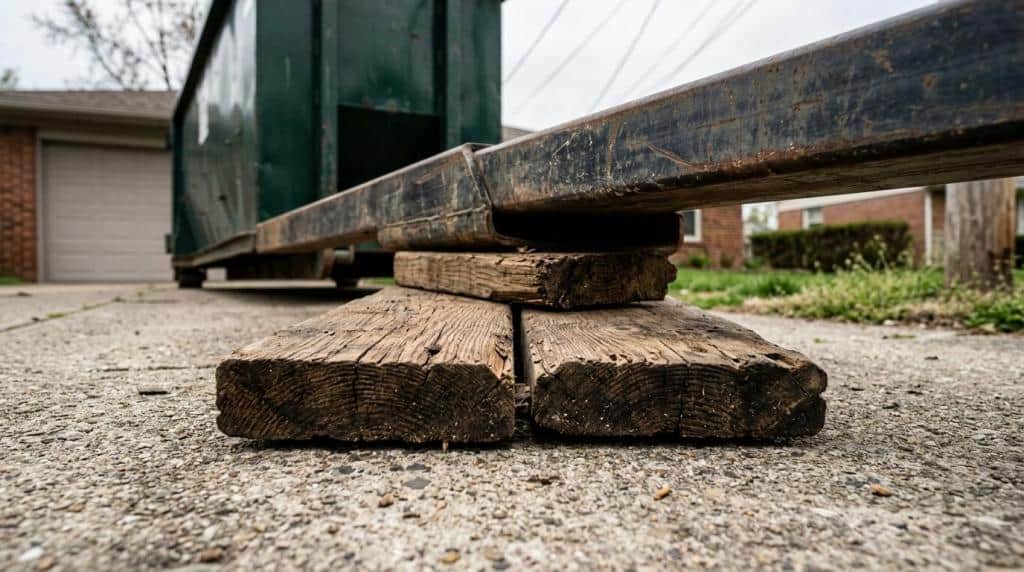
Step 2 is to protect the surface. Boards under the dumpster rails help distribute weight and reduce scraping or cracking on concrete and asphalt. This is one place where local service helps. A provider used to residential drives in the Cedar Valley will think about approach angle, not just location.
Step 3 is to protect workflow. Keep the dumpster close enough to reduce carrying distance, but not so close that it blocks garage access, shingle delivery, or ladder setup. Many people assume the nearest possible spot is always best. It is not, especially if it forces the crew to walk around parked vehicles all day.
What roofing materials can go in a dumpster, and what items are not allowed?
Most standard roofing debris can go in a roll-off dumpster, but asbestos, liquids, and certain specialty waste cannot. Asphalt shingles, flashing, felt, and wood decking are usually accepted, while regulated materials follow separate disposal rules.
Older Iowa homes sometimes raise questions about legacy materials, so it helps to sort common roofing waste from restricted waste early. After you confirm the load type with the rental provider, keep the container dedicated to roofing debris rather than mixing in garage junk or hazardous leftovers.
- Usually allowed: asphalt shingles, underlayment, tar paper, wood shakes, decking, nails, flashing, gutters
- Often extra fee items: tires, appliances, fluorescent bulbs or fixtures
- Not allowed in a standard roofing dumpster: asbestos-containing material, paint, solvents, fuel, batteries, hazardous liquids
A common misconception is that every old roof automatically contains asbestos. Many do not. But if the structure is older and the material looks suspect, testing comes before loading, not after.
How do you load a roofing dumpster safely and avoid overweight charges?
Safe loading means even distribution, a clear fill line, and close attention to shingle weight. Asphalt shingles and plywood can overload a container long before it looks full, especially on multi-layer tear-offs.
Step 1 is to spread the heavy material across the floor of the dumpster instead of building one dense mound at the front or rear. That protects the container, helps hauling safety, and keeps the load stable when the truck rolls it up.
Step 2 is to watch the fill height and the material mix. Keep debris below the top edge so nothing spills during transport. If the load is mostly shingles, stop and assess tonnage before you assume you still have room. If the box is half to two-thirds full and it is almost all asphalt, you may already be near the limit.
Step 3 is to clean as you go. Use a magnetic nail sweeper around the driveway, lawn, and sidewalk, and keep a dedicated spot for recyclable metal if the project warrants separation. Pro tip: overage fees are often less about dumpster size and more about not checking layer count before loading day.
What roofing dumpster rental terms matter most in Iowa?
The most important roofing dumpster terms are included days, pricing structure, weight charges, and extension rules. In Iowa, a clear flat-rate quote from 3D Solutions or another provider saves more money than a low teaser rate with vague tonnage terms.
Before booking, compare the contract details that affect a roof job in real conditions, not just the advertised starting price. A roof replacement can shift because of weather, decking repairs, or insurance timing, so flexibility matters.
- Included time: 7 to 14 days is common; 3D Solutions includes up to 14 days on many rentals
- Pricing model: flat-rate base plus disclosed tonnage is easier to budget than unclear disposal language
- Extensions and swap-outs: ask about daily fees, same-day availability, and how fast a full box can be exchanged
- Property protection: ask whether boards are used to protect concrete or asphalt
- Permit responsibility: if the dumpster must sit in a street or public right-of-way, confirm who handles local approvals
One more trade-off deserves attention. A very low base rate can look attractive, but roofing debris is heavy, so transparent overage pricing is often the more useful number.
When should you schedule roofing dumpster delivery, pickup, or a swap-out?
The best time to deliver a roofing dumpster is the day before tear-off or early the same morning. In Denver, Iowa, and the wider Cedar Valley, weather and contractor scheduling make timing almost as important as dumpster size.
For a one-day residential tear-off, many crews want the container on-site before shingles start coming off. That keeps the yard clear and helps the job stay within OSHA cleanup expectations. If rain is in the forecast, early placement also reduces last-minute scrambling.
Pickup should happen after the final cleanup sweep, not the minute the last shingle bundle is nailed down. Roofers still need room for packaging, scraps, and any late decking cuts. If the project is bigger or the roof has multiple layers, plan a swap-out in advance rather than waiting until the container is packed and the crew is stalled.
If you are in Waterloo, Cedar Falls, Waverly, Denver, or nearby communities and you know the square count, layer count, and material type, a quick call or online booking request can usually narrow the choice fast. For many local jobs, that short planning step is what separates a clean one-container project from a slow, expensive cleanup.
Key Takeaways
- Pick a roll-off, not front-load service: open-top access and higher walls suit shingle bundles, torn decking, and long flashing, while front-load lids are built for bagged trash.
- Protect the driveway with boards: placed under the container’s contact points, they help guard concrete and asphalt during a heavy roofing load.
- Give the truck a clear approach: roll-off delivery needs a straight path and overhead clearance free of power lines and low branches.
- Keep the container roofing-only: shingles, underlayment, felt, flashing, and decking are accepted, while asbestos, paint, solvents, fuel, and liquids are not.
- Sweep for nails as you go: a magnetic sweeper across the drive, lawn, and sidewalk prevents flats and injuries once the crew clears out.
- Compare terms, not just the teaser rate: included days, disclosed per-ton overage, extension fees, and who handles a right-of-way permit shape the real cost.
More Questions About Renting a Dumpster for Your Roofing Job
Can a homeowner rent a roofing dumpster directly, or is it only for contractors?
Any homeowner can rent directly. You do not need to be a licensed contractor or go through a roofing company to book a roll-off. If you are managing your own tear-off, coordinating an insurance claim, or handling cleanup after a contractor finishes, you can place the order yourself online or by phone. The booking process is the same regardless of who is renting.
What happens if rain fills the dumpster during the rental period?
Rainwater adds weight, and weight counts toward tonnage. A dumpster that collects significant rainfall between delivery and pickup can push the load closer to overage territory, especially when combined with heavy roofing debris. If extended rain is in the forecast during an active tear-off, covering the container with a tarp when crews are not actively loading is a simple way to keep water out. The rental provider does not control weather-related weight accumulation, so that cost falls on the renter.
Does the base rate include a weight allowance, or does tonnage start billing immediately?
The base rental rate covers delivery, pickup, and the included rental period, but weight is billed separately once debris exceeds the included tonnage. With 3D Solutions, overage is posted at $43 per ton beyond what the load includes. The practical takeaway for roofing jobs is to estimate shingle weight before booking rather than assuming the base rate absorbs everything. Asphalt shingles are one of the denser materials a roll-off handles, so tonnage is where roofing jobs most often see unexpected costs.
Do you need to be home when the dumpster is delivered or picked up?
Not necessarily, but you need to have the placement location clearly communicated in advance. If the driver knows exactly where the container goes, gate codes if any apply, and whether there are access restrictions, the drop can happen without you present. The same applies to pickup. If the container is accessible and the area around it is clear of vehicles or obstructions, the truck can complete the haul without a homeowner on-site. Confirming those details when booking prevents delays on both ends.
Can roofing debris be mixed with other renovation waste in the same container?
Generally yes, as long as none of the added material is on the restricted items list. If you are replacing siding, repairing a fascia, or clearing out attic insulation during the same project, that debris can typically share the container with roofing material. The risk is weight. Mixing dense roofing debris with additional construction waste raises the total tonnage faster than either material would alone. If the combined load is heavy, keep an eye on the weight estimate rather than treating the extra space as free capacity.
What if the roofing project gets delayed or rescheduled after the dumpster is already booked?
Contact the provider as early as possible. If delivery has not happened yet, rescheduling is usually straightforward. If the container is already on-site and the project stalls due to weather, insurance delays, or contractor availability, the 14-day rental window gives you some buffer before extension fees begin. If the delay pushes past that window, the $5 per day extension rate applies. Planning around Iowa’s spring weather variability is one reason the longer included rental period matters more for roofing jobs than for interior cleanouts.