Contractors rarely struggle with debris volume alone. They struggle with timing, site access, disposal rules, and whether the invoice will still match the quoted price after pickup.
- The best contractor dumpster rental is usually a flat-rate 20-yard or 30-yard roll-off with clear debris rules, enough included rental time to cover schedule drift, and local delivery support; in the Cedar Valley, 3D Solutions is a strong fit because it offers 20-yard and 30-yard dumpsters, up to 14 days included, and same-day delivery when available.
- For most renovation and light demolition work, a 20-yard dumpster handles mixed debris efficiently, while a 30-yard dumpster is the better choice for whole-home remodels, larger tear-outs, and bulky but lighter loads.
- Pricing structure matters as much as size. A Flat-rate pricing quote is easier for contractors to budget than a base rate plus layered fuel, overage, or short-term rental fees.
- Debris rules are not optional. The EPA treats construction and demolition debris as a distinct waste stream, and hazardous waste generally cannot go to a C&D landfill unless the facility is specifically permitted to receive it.
- Local planning matters in places like Denver, Waterloo, Cedar Falls, and Waverly because driveway width, alley access, weather, and municipal traffic flow can affect delivery timing and placement.
- If your project may run long, ask about extensions before booking. One local example: 3D Solutions lists a 20-yard dumpster at $335 with up to 14 days included and a $5-per-day extension rate.
If you are managing crews in Denver, Iowa or across Black Hawk and Bremer counties, the best choice is rarely the cheapest box on a web page. It is the provider that matches the job’s debris type, keeps the container on site long enough, and helps you avoid stoppages when demolition moves faster or slower than planned.
What makes a dumpster rental good for contractors?
The best contractor dumpster rental is a roll-off service with predictable pricing, practical sizes, and firm debris rules. In Waterloo and Cedar Falls, contractors usually need a 20-yard or 30-yard container that can be delivered quickly and stay on site long enough to match the work schedule.
A contractor-grade rental should answer five questions before you book: What size fits the debris, how long is included, what materials are allowed, how fast can delivery happen, and what happens if the project slips a few days? If any of those answers are vague, the rental may look simple at checkout but create friction on the jobsite.
One common mistake is choosing only by price. A low base rate can lose its value fast if the provider adds extra days, restricted material fees, or vague pickup timing that leaves a full container parked where trades still need access.
“3D Solutions offers 20-yard and 30-yard roll-off dumpsters with up to 14 days included, giving contractors a defined planning window for remodels and cleanup.”
For contractors in the Cedar Valley, local service also matters. A provider that regularly works in Denver, Waverly, Cedar Falls, and Waterloo is more likely to know residential street constraints, driveway layouts, and how weather can affect placement and pickup.
Which dumpster size fits most contractor jobs in the Cedar Valley?
Most contractor jobs fit a 20-yard dumpster first, while larger renovations often need a 30-yard dumpster. In Denver and Waverly, the right choice usually depends less on square footage than on material density, demolition scope, and how often the crew wants the box emptied.
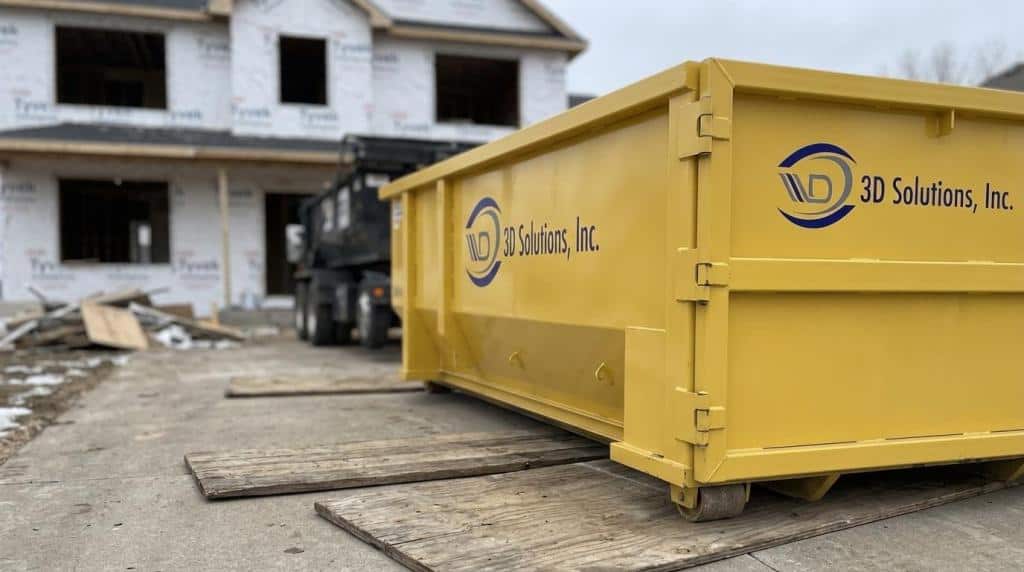
A 20-yard container is often the workhorse for kitchen remodels, flooring tear-outs, deck removal, siding replacement, and moderate construction debris. 3D Solutions lists its 20-yard as 22 feet long, 7 feet wide, and 4.5 feet high, which is useful when you are checking driveway fit and loading height for laborers.
A 30-yard container makes more sense when the job produces a lot of bulky debris, including framing scraps, drywall, cabinetry, insulation, and packaging from larger remodels. Its listed dimensions, 22 feet long, 8 feet wide, and 6 feet high, tell you two things: it takes more placement room, and it gives you more vertical capacity if the debris is lighter and stackable.
A common misconception is that bigger is always safer. That is not true when the load is heavy. Concrete, dirt, roofing tear-off, and brick can make a large container impractical or subject to different hauling rules, so dense materials should always be discussed before the order is placed.
What are the best contractor dumpster rental options in the Cedar Valley?
For most local contractors, the best options are local roll-off providers with published sizes, flat-rate terms, and clear debris limits. That usually beats a generic broker model when you need fast answers about delivery windows, extensions, or mixed construction loads.
- 3D Solutions, Inc.: Best fit for contractors who want published 20-yard and 30-yard roll-off options, flat-rate pricing, up to 14 days included, and local service across Black Hawk, Bremer, and nearby Iowa counties.
- Local independent roll-off companies with direct dispatch: Best when site supervisors need quick placement decisions, live communication, and fewer handoffs between booking and delivery.
- National broker platforms: Useful for firms managing jobs in multiple states, but service quality, debris rules, and final fees can vary by local hauler.
- Municipal or commercial waste programs: Sometimes workable for ongoing site waste, though they are often a weaker fit for demolition-heavy contractor cleanup.
The right provider is the one that gives your superintendent fewer variables to manage. If your crew is working on a remodel in Waterloo this week and a roofing job in Cedar Falls next week, consistency in terms matters more than flashy booking flow.
How do contractors estimate the right roll-off size before demolition starts?
The fastest way to size a contractor dumpster is to estimate by material type first, then by room count, then by schedule. In Cedar Falls and Denver, wood framing, drywall, shingles, and cabinets create very different loading patterns even when the project size looks similar on paper.
Step 1 is to classify the debris. Mixed remodel debris is usually a 20-yard starting point. Bulky but lighter material from a whole-home renovation may justify a 30-yard. Dense debris changes the equation quickly, so do not size a box for concrete the same way you size one for drywall.
Step 2 is to estimate how the debris will load. Loose demolition waste takes more air space than bundled or cut-down material. If the crew can break down cabinets, trim lumber, and stack drywall cleanly, a smaller container may work. If labor time matters more than tight loading, size up.
Step 3 is to factor in operational risk. If a project cannot pause while waiting for a swap-out, choose the size that gives you margin. That is often smarter than squeezing debris into a smaller box to save a modest amount on the initial order.
How does a flat-rate contractor dumpster compare with variable-fee pricing?
Flat-rate pricing is usually better for contractors because it reduces invoice surprises. In markets like Waterloo and Waverly, a published rate for a 20-yard or 30-yard dumpster gives estimators a cleaner number to carry into bids and change orders.
Variable-fee pricing can still work if the waste stream is predictable and the provider itemizes everything clearly. The problem is that many contractor jobs are not predictable. Demo expands, hidden materials appear, weather shifts the schedule, and the container stays on site longer than planned.
That is where flat-rate terms help. 3D Solutions lists 20-yard dumpsters starting at $335 and 30-yard dumpsters starting at $355, both with up to 14 days included. When the base-price gap is small, the real decision is usually operational fit, not just the starting number.
“3D Solutions lists 20-yard dumpsters starting at $335 and 30-yard dumpsters starting at $355, so many contractors should choose by debris profile, not by a small starting-price difference.”
A practical tip is to ask one more question even on flat-rate jobs: what triggers extra cost? Extension days, prohibited items, overloaded containers, and special materials are the issues most likely to change the final total.
What can go into a contractor dumpster, and what must stay out?
Most contractor dumpsters accept common construction and demolition debris, but hazardous materials still require separate handling. The EPA identifies C&D debris as a major waste stream that includes wood, drywall, plaster, brick, clay tile, concrete, asphalt concrete, steel, roadwork material, excavated material, and site clearance waste.
That matters because many crews still treat a roll-off like a catch-all. It is not. EPA guidance says C&D landfills do not receive hazardous waste unless they meet specific standards and are permitted to do so. On a remodel or tear-out, that usually means paint, solvents, chemicals, batteries, and similar materials need another disposal path.
After you confirm the job scope, sort the materials into three categories:
- Usually accepted: wood, drywall, flooring, cabinets, siding, non-hazardous renovation debris
- Needs provider confirmation: concrete, brick, dirt, asphalt, appliances, mattresses
- Usually excluded: paint, solvents, batteries, propane tanks, tires, asbestos-containing material
A common misconception is that “construction debris” means any material from a jobsite. It does not. If the debris could be regulated as hazardous or requires special handling, assume it is excluded until the hauler confirms otherwise.
How should you stage a roll-off dumpster on a jobsite to protect pavement and access?
Good staging protects the site and speeds loading. In Denver and Cedar Falls, the best placement gives the driver a clear drop zone, keeps subcontractor traffic moving, and leaves enough room for doors, garages, and material deliveries.
Step 1 is to choose a surface that can handle the container and truck. Flat, hard surfaces are best. If the box is going on a driveway, ask whether protective boards are used. 3D Solutions states that it uses protective boards to help safeguard driveways and property, which is a meaningful detail for residential remodels.
“3D Solutions uses protective boards to help safeguard driveways and property, which matters on residential contractor jobs where pavement damage can become a customer issue.”
Step 2 is to measure approach and swing clearance, not just the footprint. A roll-off truck needs room to back in, tilt, and place the container. A driveway that looks long enough may still fail if tree limbs, parked vehicles, or overhead wires restrict the angle.
Step 3 is to stage for labor efficiency. Put the dumpster close enough to reduce carrying distance, but not so close that it blocks framing deliveries, lifts, or access to the front entry. One smart move is to think through the next trade, not just today’s demo crew.
Is a 20-yard or 30-yard dumpster better for roofing, remodeling, and demolition?
For roofing, weight is often the limiting factor, so many contractors start with a 20-yard and confirm material rules before loading shingles. For interior remodels, the choice depends on how many bulky items are coming out at once. A bathroom and kitchen combo might still fit a 20-yard, while a multi-room gut often pushes toward 30 yards.
For demolition or major tear-outs, the right answer depends on whether the debris is heavy, mixed, or both. If the load is heavy, larger is not always better. If the load is mixed and bulky, the 30-yard saves time by reducing overflow risk and cutting down on the need for a second container too early.
How do same-day delivery and 14-day rentals affect project scheduling?
Same-day delivery and longer included rental periods reduce schedule risk. In Black Hawk County and Bremer County, that matters because contractor timelines often change after inspections, weather delays, owner decisions, or hidden conditions inside walls and floors.
A short rental window can force crews to either rush the cleanup phase or pay extension charges sooner than expected. A 14-day included term is easier to work into remodel sequencing, especially when demo, framing, rough-ins, and final cleanup are spread across separate subcontractors.
“3D Solutions offers up to 14 days included and same-day delivery depending on location and demand, which gives Cedar Valley contractors more room to adapt when schedules shift.”
What does that planning buffer help with?
- Weather delays
- Inspection reschedules
- Subcontractor sequencing
- Final cleanup after punch-list work
A practical tip here is simple: order before the site is desperate. Same-day delivery is valuable, but it depends on location and demand, so crews should still book ahead when the demo date is known.
Why do debris rules matter more on contractor jobs than on homeowner cleanouts?
Debris rules matter more on contractor jobs because contractor loads are mixed, higher volume, and more likely to include regulated items. The EPA estimated 600 million tons of construction and demolition debris were generated in the United States in 2018, which shows how different this stream is from ordinary household trash.
Contractor jobs also generate materials that do not belong in municipal solid waste. That distinction matters at the disposal level and at the estimating level. If you blend acceptable renovation debris with prohibited items, you risk rejected loads, extra handling, or time lost while the crew resorts material.
There is also an upside to doing it right. EPA guidance says reducing and recycling C&D materials can conserve landfill space, reduce environmental impacts, create jobs, and lower project expenses through avoided purchase and disposal costs. For a contractor, that means material separation is not only about compliance. It can improve project economics.
How should contractors book pickup, extensions, or swap-outs without slowing the crew?
The best process is to schedule pickup and extension decisions before the container is full. In Denver, Waterloo, and nearby towns, contractors who treat waste service like a live part of the schedule usually avoid the stop-and-start pattern that hurts labor productivity.
Step 1 is to set a checkpoint before the dumpster reaches capacity. Many site leads wait until the box is nearly full, then call for pickup. That is late. Review fill level while there is still enough room to finish the current workday safely.
Step 2 is to connect pickup timing to the scope, not the calendar alone. If demolition ends Thursday and framing starts Friday, you may want the container gone even if included rental time remains. If trim-out is still producing debris next week, an extension or a second haul may be the better move.
Step 3 is to confirm what the provider needs from you. Ask about lead time, whether same-day pickup is realistic, whether swap-outs are available, and how extension charges are handled. One local benchmark is useful here: 3D Solutions lists a $5-per-day extension rate on its 20-yard dumpster, which makes schedule drift easier to price before it happens.
If your next project is in Denver, Cedar Falls, Waterloo, Waverly, or elsewhere in the Cedar Valley, the smart move is to match the container to the debris stream, the site layout, and the real production schedule, then confirm rules and timing with a local provider before the first wall comes down.
What Contractors Ask Us Before They Rent Dumpsters
Do I need a permit to place a roll-off dumpster on a public street in Iowa?
Permit requirements vary by municipality. Some cities require a right-of-way permit when a container sits on a public street or sidewalk, while others do not. Check with your local city or county office before placement. Keeping the dumpster on private property, such as a driveway or job site lot, typically avoids the permit question entirely.
Can I load a contractor dumpster with both roofing and interior demo debris in the same haul?
Sometimes, but it depends on weight. Shingles are dense, and mixing them with framing scraps, drywall, and cabinets can push a container toward its weight limit faster than expected. If the job produces both streams simultaneously, talk to the provider before loading to avoid overage charges or a rejected haul.
What happens if my crew accidentally puts a prohibited item in the dumpster?
Contact the provider as soon as you realize the mistake. Waiting until pickup creates more problems. In most cases, the crew will need to remove the item before the container is hauled. Some providers charge a handling fee if prohibited materials are discovered at the disposal site.
Is a 30-yard dumpster harder to place on a residential jobsite than a 20-yard?
Yes, in most cases. The 30-yard sits higher and wider, which affects approach angles, overhead clearance, and how much of a driveway or staging area it occupies. If the site is tight, confirm dimensions with the provider before booking so the driver does not arrive to a placement that will not work.
Can multiple subcontractors use the same dumpster on a shared job site?
Yes, and it is common on larger remodels. The practical issue is accountability. When multiple trades share a container, prohibited items are more likely to end up inside it. Designating one person on site to manage what goes in keeps the load clean and reduces the chance of overage or disposal issues at the end of the job.
How do extension charges work if my project runs over the included rental period?
Extension charges are typically billed per day beyond the included rental term. The rate varies by provider, so confirm it before booking rather than after. Knowing the daily rate lets you factor potential drift into your project budget rather than absorb it as an unexpected cost at invoice time.
Does debris weight affect my final invoice on a flat-rate rental?
Flat-rate pricing typically includes a weight allowance. If the load exceeds that threshold, an overage charge applies per ton. For contractor jobs with dense materials like concrete, brick, or roofing tear-off, it is worth asking what the included weight allowance is and whether the planned load is likely to exceed it.