A basement cleanout dumpster turns a slow, box-by-box purge into one controlled haul. It fixes the problem every basement job runs into: too much bulky, dirty, or water-damaged material for curbside pickup, and too many loads for a single truck. If you are clearing a basement in Denver, Waterloo, Cedar Falls, or the surrounding Cedar Valley, a 20-yard roll-off is the size most homeowners should start with.
We are based in Denver, Iowa and run our containers out of a Waterloo yard, so a basement cleanout here is a short local delivery, not a logistics project. The goal below is simple: help you pick the right size, estimate your load honestly, and avoid the fees that catch people off guard.
What size dumpster is best for a basement cleanout?
A 20-yard roll-off is the best default for most basement cleanouts. It holds a full basement purge while keeping the walls low enough to load by hand without constant overhead lifting.
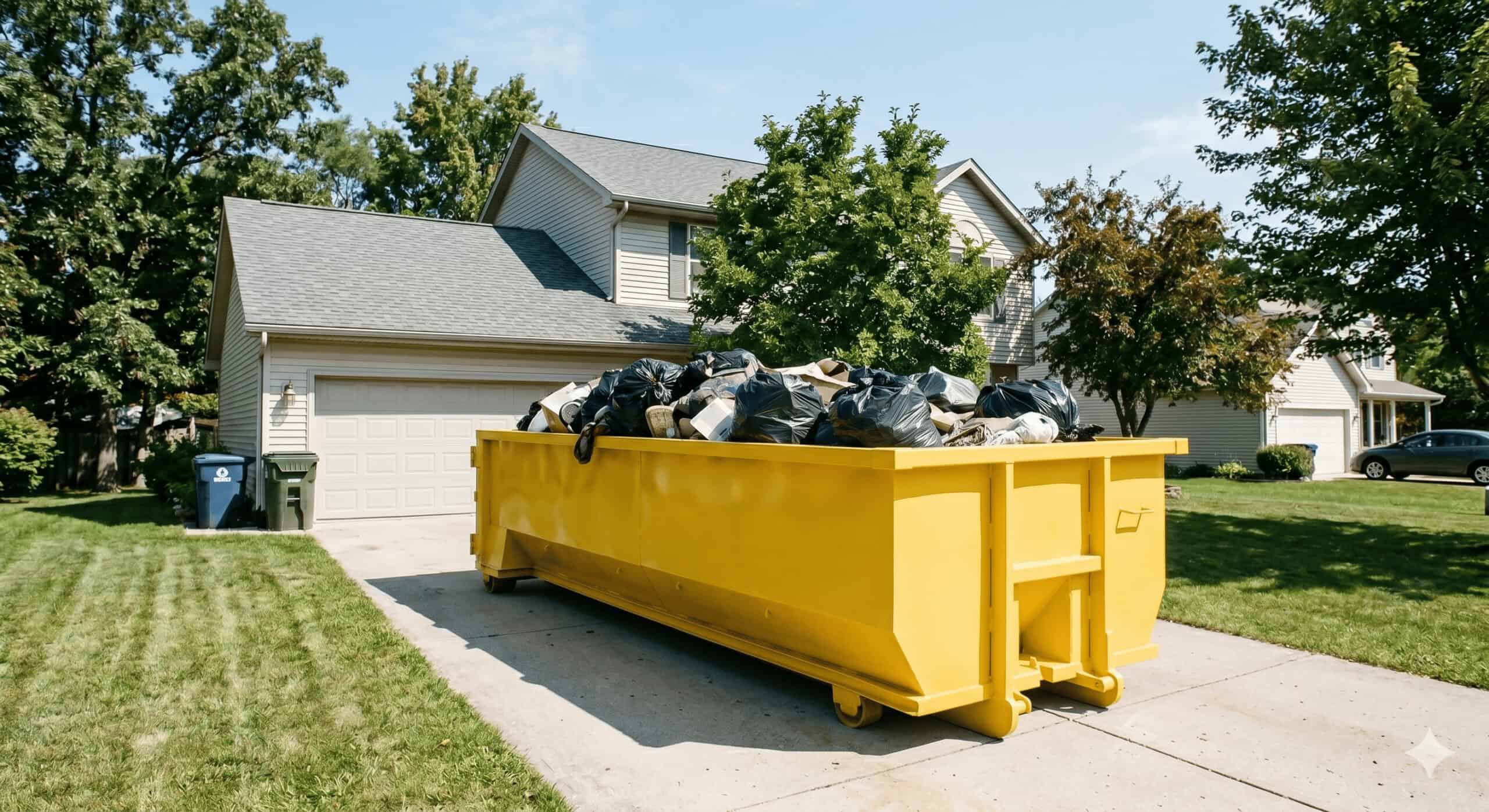
Basement debris is rarely just light junk. It usually mixes shelving, broken furniture, damp carpet, old toys, cardboard, storage totes, and sometimes small renovation waste. The 3D Solutions 20-yard measures 22 feet long, 8 feet wide, and 4 feet high. That 4-foot wall height matters more than people expect, because in basement work the lifting fatigue often matters as much as raw volume.
Step up to a 30-yard only when the scope grows. If the job is the basement plus the garage or attic, or it is an estate or multi-room clearout, the extra capacity can save a second haul. For a basement-only job where every item gets carried up the stairs, the 20-yard is usually the smarter pick.
How do you estimate basement cleanout dumpster volume before booking?
A quick room-by-room count is the most reliable way to size the job. Measure bulk first, then sanity-check weight, then add a small margin for the things you forgot were down there.
Start by grouping what you see into three piles: boxed storage, bulky furniture, and renovation debris. Boxed holiday decor and old clothes are light but space-hungry. Bookcases, recliners, and exercise equipment are bulky and awkward. Carpet, paneling, and drywall scraps stack unevenly and eat more room than you would guess.
Then convert that into dumpster terms. The 20-yard holds up to 8 pickup truck loads and the 30-yard up to 12. If your basement looks like several truck trips rather than one or two, you are already in 20-yard territory. If you are adding another room or years of accumulated storage, the 30-yard starts to make sense.
Finally, check the heavy-material factor. Books, tile, wet carpet, tools, and dense shelving can make weight, not volume, the deciding cost. A basement can look half full and still run heavy, especially after water damage, which is where the per-ton charge below comes into play.
20-yard vs 30-yard: which is better for a basement cleanout?
For most basement furniture and boxed clutter, the 20-yard is better because the lower wall is faster to load. The 30-yard wins only on genuinely high-volume jobs. The deciding factor is usually loading height, not the small price gap.
Both containers are the same 22-foot length, so the real difference is wall height and total volume. The 20-yard stands 4 feet tall; the 30-yard stands 6 feet. That 2-foot difference is real labor when every item comes up a staircase first.
| Feature | 20-yard | 30-yard |
|---|---|---|
| Dimensions | 22 ft x 8 ft x 4 ft | 22 ft x 8 ft x 6 ft |
| Capacity | Up to 8 pickup truck loads | Up to 12 pickup truck loads |
| Starting flat rate | From $335 | From $355 |
| Included rental period | 14 days | 14 days |
| Best for | Basement-only cleanouts, hand-carry up stairs | Basement plus garage or attic, estate and multi-room clearouts |
Read it this way. If you are tossing shelving, broken chairs, totes, seasonal decor, and a few furniture pieces, the 20-yard is easier to work with. If you are pulling multiple couches, large cabinet sections, and overflow from several rooms, the 30-yard prevents a second trip. A bigger box does not reduce labor when every item has to clear a taller wall by hand.
How to judge any provider: compare published dimensions, the included rental window, and how the company handles residential driveway placement. The lowest sticker price is not always the lowest finished cost once rental length and weight are factored in. Ask for the terms in writing before you book.
How should you load a basement cleanout dumpster for safety and speed?
A staged plan is the safest and fastest method. Load heavy flat items first, then bulky pieces, then bags and loose clutter on top. Roll-off dumpsters are loaded by hand, not with machinery, so order matters.
Carry everything out of the basement and build a small staging area near the exterior door or garage before you walk to the container. That cuts back-and-forth trips and lets you break items down in one pass. Disassemble shelving where you can, cut carpet into manageable rolls, and flatten cardboard so you are not throwing away air space.
Spread dense material low and flat rather than piling it in one corner, and keep the debris level with or below the top edge so the load is legal to haul. Save soft bags and loose boxes for the top layer; they fill the gaps once the bulky pieces are down. If the container sits on your driveway, ask about the protective boards we place underneath, which matter most after rain or during spring thaw when Iowa surfaces are soft.
What can go in a basement cleanout dumpster, and what needs special handling?
Most household junk and non-hazardous renovation debris can go straight in. A short list of items is prohibited outright, and a few carry a surcharge or need to go elsewhere. Knowing the split before loading prevents a pickup delay.
For a typical basement, accepted material includes furniture, wood shelving, carpet, toys, paper, cardboard, mattresses, electronics, and general non-hazardous trash. The limits kick in with old maintenance supplies, certain appliances, and heavy construction rubble.
- Accepted: furniture, wood shelving, carpet, boxes, mattresses, electronics, household clutter
- Surcharged at $75 per item: appliances, light fixtures, LED bulbs
- Confirm at booking: refrigerant appliances such as freezers, refrigerators, and older dehumidifiers (no fixed site policy, so ask how yours will be handled)
- Prohibited entirely: liquids, concrete, dirt, bricks
- Prohibited hazardous: chemicals, batteries, tires, paint
Heavy masonry is the one people get wrong. Concrete, dirt, and bricks cannot go in the container at all. If your basement project generates them, they go to a dedicated clean-fill or aggregate site, not the roll-off. If a load contains prohibited material and the truck cannot haul it, you will need to empty it and may incur charges, so keep those items out from the start.
Is basement cleanout dumpster pricing flat-rate, or can weight change the total?
Pricing is flat-rate, but weight can still change the final bill. The flat rate covers the container, delivery, pickup, and the 14-day window; extra weight is billed separately at $43 per ton.
Here is how that works in practice. Trucks are weighed at the landfill, and any excess weight is billed back at $43 per ton, so “flat-rate” means a fixed price structure, not unlimited disposal. For a normal basement of furniture, boxes, and soft goods, most homeowners never think about tonnage. For a load heavy with books, wet carpet, or dense shelving, it pays to flag the weight when you book so there are no surprises.
The 20-yard starts at $335 and the 30-yard at $355, both with 14 days included. Because the price gap between sizes is small, choose on wall height and volume first, then confirm weight, rather than picking the bigger box just because it is close in price.
How do placement, permits, and pickup work in Denver, Waterloo, and Cedar Falls?
Driveway placement is the easiest path and usually needs no permit. Street or right-of-way placement may require one, and that rule varies by city, so confirm locally before delivery.
Pick the surface first. A private driveway is faster because it avoids right-of-way questions. Clear a spot at least 15 feet long and 10 feet wide on a surface that can bear the weight, move any vehicles, and leave room for the truck to roll the container off and retrieve it. You do not need to be present at delivery if the area is clear and you have given placement instructions.
If the container has to sit on a public street or alley in Waterloo, Cedar Falls, Waverly, or any other town, check with that city before delivery, since right-of-way rules differ by municipality. On placement timing, delivery typically runs 24 to 48 hours out, with same-day possible depending on location and demand, so set a target pickup day when you book even if you adjust it later. That helps most in the busy spring and summer weeks when cleanouts and remodels stack up across the Cedar Valley.
How long should you keep a basement cleanout dumpster?
The included 14-day window is a strong fit for basement work, because sorting takes longer than most people plan for. If you need more time, the 20-yard extends at $5 per day.
Basements slow people down. You are deciding what to trash, donate, keep, and set aside for special disposal, all while carrying items up stairs around weather interruptions. A one-week plan can quietly become ten days. Having up to 14 days on both the 20-yard and 30-yard lets you work in stages instead of cramming the job into a single weekend.
If you are torn between the two sizes, the fastest answer is a quick call with a rough item list. We can usually tell you in a minute whether the lower wall height or the extra volume will save you more time on your specific basement.
Key Takeaways
- The 20-yard (22 x 8 x 4 ft, up to 8 truck loads) is the default basement cleanout size; its 4-foot wall loads faster than the 6-foot 30-yard.
- Step up to the 30-yard (22 x 8 x 6 ft, up to 12 truck loads) for estate, multi-room, or basement-plus-garage jobs.
- Flat rate covers the container and 14 days; extra weight is billed at $43 per ton after the truck is weighed at the landfill.
- Concrete, dirt, and bricks are never allowed; appliances, light fixtures, and LED bulbs carry a $75 per-item surcharge.
- Driveway placement usually needs no permit; for street or right-of-way placement, confirm with your city first.
- Load heavy and flat first, keep debris below the rim, and ask for protective boards on soft or wet driveways.
More Questions Homeowners Ask Before Renting a Basement Cleanout Dumpster
Can I open the rear door of the dumpster to walk items in instead of lifting them over the side?
Yes. Most roll-off dumpsters have a swing-open rear door that lets you walk heavier items directly inside at ground level. This is especially useful during basement cleanouts where you are already carrying things up stairs and do not want to lift them a second time over the container wall. Once the heavy pieces are loaded, you can close the door and toss lighter items over the side.
How full can I fill a basement cleanout dumpster?
Debris should stay level with or below the top edge of the container. Overfilled dumpsters create safety issues during transport and may not be picked up until the load is brought down to a legal height. If you are loading bulky but lightweight items like furniture cushions, cardboard boxes, or plastic totes, break them down or compress them to make better use of the space inside.
What should I do if I find mold or water-damaged materials during my basement cleanout?
Mold-affected drywall, carpet, and insulation can generally go into a roll-off dumpster as long as the material is non-hazardous. Bag loose debris when possible to reduce dust and spore spread during loading. If the mold covers a large area or you suspect the contamination involves sewage or chemical exposure, consult a remediation professional before continuing the cleanout on your own.
Should I sort items for donation before the dumpster arrives?
Sorting before delivery is the most efficient approach. Walk through the basement and separate anything worth donating, selling, or recycling before the container shows up. Once the dumpster is on site, the temptation is to toss everything quickly, and usable items often end up buried under debris. A pre-sort also reduces your total volume, which can help you stay within your chosen container size.
What if I discover old paint cans, chemicals, or batteries mid-cleanout?
Set those items aside and keep them out of the dumpster. Paint, chemicals, and batteries are prohibited, and mixing them into general debris can delay pickup or add charges. Check with your county for household hazardous waste drop-off options. Black Hawk County and Bremer County both offer disposal programs, but schedules and accepted items vary, so verify the current details with your local program before dropping anything off.
Can I share a dumpster rental with a neighbor who also needs a cleanout?
There is no rule against it, and splitting a rental can trim costs if both projects are small enough to share one container. Keep in mind the account holder is responsible for the total weight and everything loaded. If the combined load runs heavy, any overage billed at $43 per ton falls on that account, and so does anything restricted that a neighbor adds.
Will a roll-off dumpster damage my lawn if the driveway is too short?
A dumpster placed on grass can leave ruts or compression marks, especially in softer ground after rain or during spring thaw. If your driveway cannot fit the full length of the container, ask about placing protective boards under the contact points. Whenever possible, a paved surface is the better option for both stability and surface protection.
How do I handle large basement appliances like old freezers or dehumidifiers?
Large appliances usually need special handling. 3D Solutions applies a $75 per-item surcharge on appliances, light fixtures, and LED bulbs, and refrigerant units like freezers, refrigerators, and older dehumidifiers may need to be handled separately. The site does not publish a fixed refrigerant policy, so confirm how your specific appliance will be handled when you book rather than loading it unannounced.
Ready to clear your basement? Book a 20-yard or 30-yard roll-off with 3D Solutions, or call (319) 406-0043 or email [email protected] with a rough item list and we will help you pick the right size for the Cedar Valley.