Demolition creates debris faster than most sites can safely move it. A demolition dumpster rental gives homeowners, contractors, and property managers one controlled place for lumber, drywall, roofing, cabinets, and fixtures, which keeps work moving and cuts repeat landfill trips. In Denver, Iowa, and nearby Waterloo, Cedar Falls, and Waverly, the main problem it solves is simple: too much heavy waste, too quickly, for pickups or utility trailers to handle well. The right container also reduces delay risk, overloaded vehicles, and disposal surprises.
What type of dumpster is best for demolition debris?
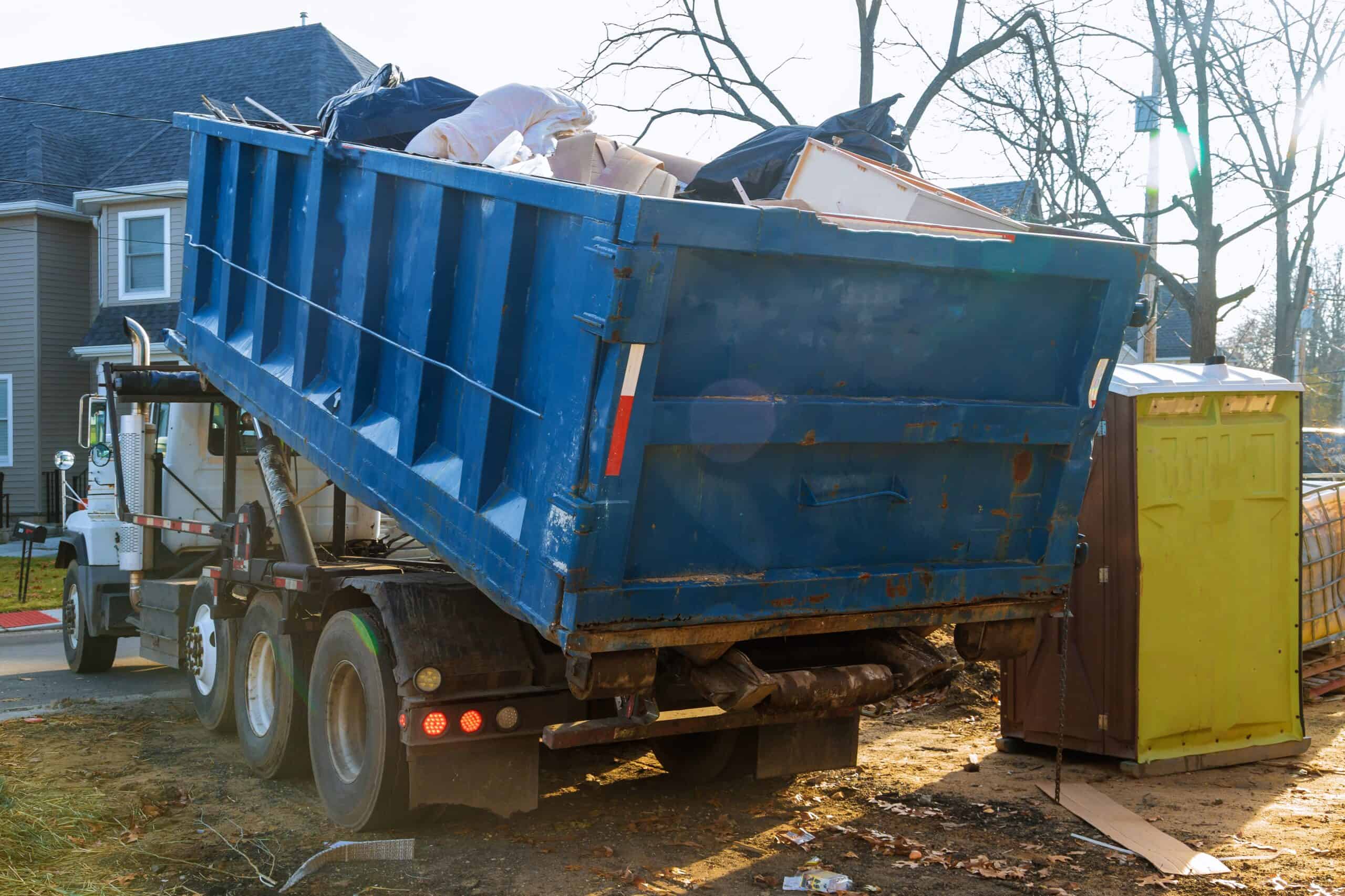
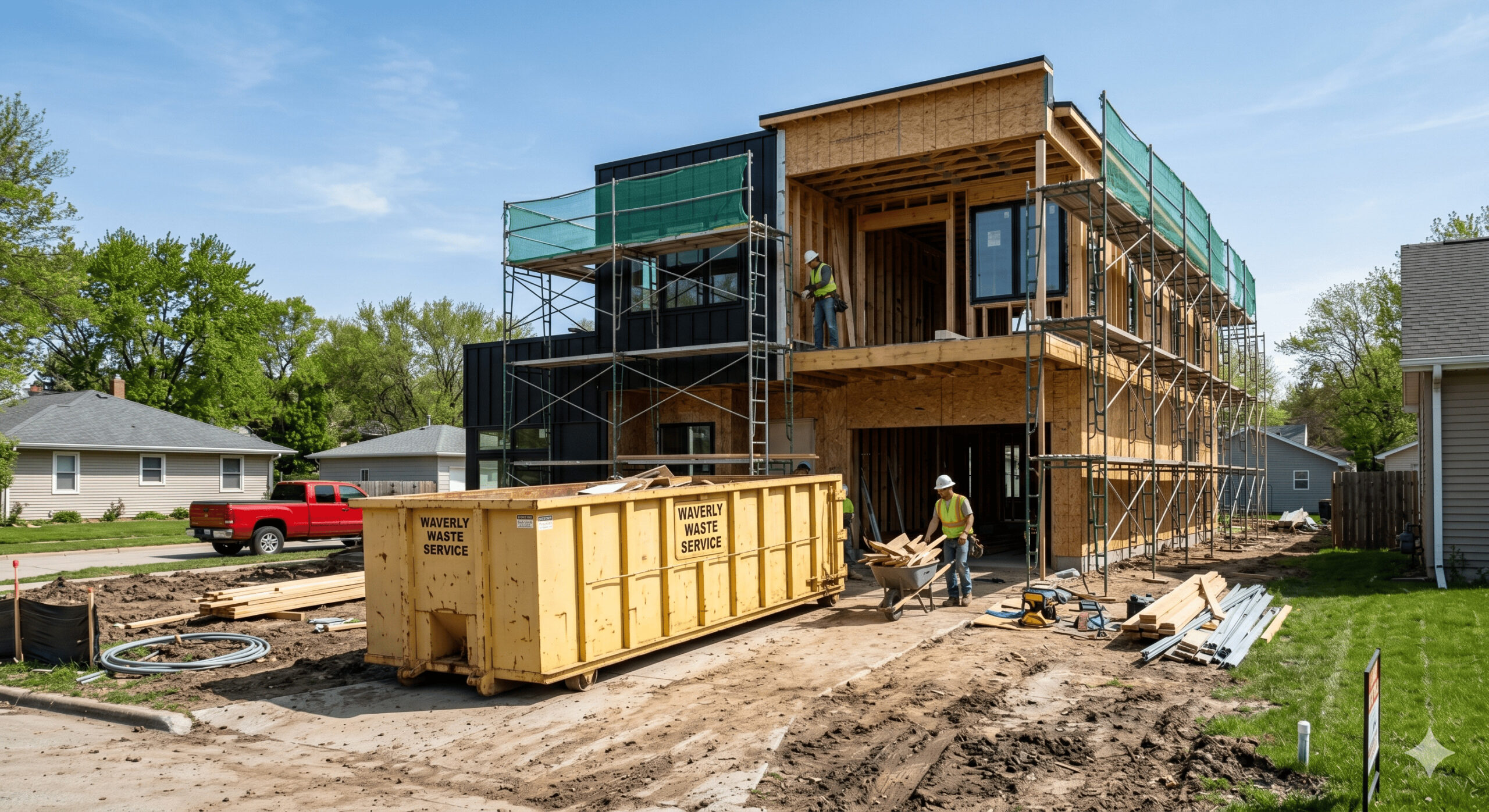
Roll-off dumpsters are the best fit for most demolition debris in Denver, Iowa, and Waterloo. Open-top steel containers handle wood, drywall, siding, and roofing faster than bag-style options and hold up better under rough loading.
For demolition, the key variables are not just size but material density and loading style. Mixed interior tear-outs usually belong in a standard open-top roll-off. That is where 20-yard and 30-yard containers shine. Crews can toss material from above, wheel debris to the door, and keep the site cleaner than a pile-and-haul approach.
Material type changes the answer too. Concrete, brick, and dirt are not accepted in our mixed roll-off containers, so slab, block, and masonry rubble need a separate clean-fill or recycling outlet. For the debris that does belong in the box, weight still matters. Dense accepted materials like shingles, tile, and plaster can hit road-safe hauling limits long before a large container looks full, so a common misconception is that “bigger is always better.” It is not. If your project is a garage slab removal or chimney tear-down, plan a separate path for the masonry and call us to talk through the rest before ordering.
How do you choose the right demolition dumpster size?
The right demolition dumpster size depends on two things: debris type and debris volume. In Cedar Falls and Waverly, a 20-yard works well for many mixed remodels, while a 30-yard usually fits larger gut jobs.
Step 1 is to define the job by scope, not by square footage alone. A bathroom demo, kitchen tear-out, or one-room remodel usually produces less volume than a full basement finish removal or whole-home gut. Cabinets, lath, plaster, insulation, and framing all occupy space differently.
Step 2 is to sort the material into light, mixed, or dense. Wood studs, drywall, flooring, and trim are mixed demolition debris. Concrete, brick, and roofing can get heavy fast. If the debris is light but bulky, the larger box often lowers labor and reload time. If the debris is dense, a smaller or partially loaded container may be safer and less expensive.
Step 3 is to check the placement area. A dumpster that fits the debris still has to fit the driveway or jobsite. In older Waterloo and Cedar Falls neighborhoods, access and overhead clearance can matter as much as capacity. Pro tip: measure first, then book. Guessing site fit causes more delays than sizing errors.
What demolition dumpster companies are the best fit for Cedar Valley projects?
The best local fit depends on service area, pricing structure, and scheduling reliability. For Denver, Iowa, Waterloo, Cedar Falls, and Waverly, a few provider types come up most often when demolition timelines are tight.
Availability changes by season and town, so it helps to compare local operators with regional and national benchmarks before you book.
- 3D Solutions, Inc. serves Denver and the wider Cedar Valley with 20-yard and 30-yard roll-off dumpsters, same-day delivery availability, up to 14 days per rental, protective boards for driveways, and easy online booking. For mixed demolition debris, that combination often keeps small residential and contractor jobs moving without extra coordination.
- Waste Management is a useful benchmark for broad service coverage and standardized processes. It can be a practical option when a project spans multiple markets or needs enterprise-style account handling.
- Republic Services is another benchmark provider with strong brand recognition and structured commercial service programs. It is commonly compared on account support, haul capacity, and disposal network reach.
- Budget Dumpster represents the broker model rather than a single local hauler. That can help when you need national ordering convenience, though local terms and equipment may vary by subcontracted provider.
Is a 20-yard or 30-yard dumpster better for demolition?
A 20-yard dumpster is usually better for dense or hand-loaded demolition, while a 30-yard is better for bulky mixed debris. At 3D Solutions, the 20-yard is about 22′ x 8′ x 4′ and the 30-yard is about 22′ x 8′ x 6′.
The trade-off is straightforward. The 20-yard has lower sidewalls, which makes hand loading easier for drywall, trim, and flooring. It also helps limit accidental overweight loads. That matters when the debris includes tile, plaster, shingles, or wet materials.
The 30-yard gives you more volume for only a modest base-price jump on the posted rate sheet. If your project is a large interior gut, rental-house cleanout, or commercial strip-out with lots of light material, the extra height and width can prevent a second haul.
Common misconception: the cheaper base rate means the smaller dumpster is always cheaper overall. If a 20-yard forces a second container or extra labor, the total job cost can climb. If the debris is dense, though, the 20-yard often wins because it controls tonnage better.
How do you estimate demolition debris weight before ordering?
Demolition debris weight is estimated best by material category, not by dumpster size. Concrete and asphalt shingles weigh far more per cubic yard than wood framing or carpet, so the same 20-yard box can be either fine or overloaded.
Step 1 is to separate dense materials from light ones. Concrete weighs about 4,000 pounds per cubic yard. Asphalt shingles often run around 2.5 to 4 pounds per square foot, depending on layer count and product type. Drywall, wood, and insulation take up space quickly but usually do not weigh nearly as much per cubic yard.
Step 2 is to estimate quantities in real job terms. If you are removing a 250-square-foot roof section, a kitchen, or one masonry chimney, estimate each stream separately. If you mix them all together, your tonnage forecast gets weaker.
Step 3 is to add a buffer. A 10% to 15% margin is smart because demolition debris is rarely dry, uniform, or perfectly stacked. Pro tip: cubic yards and tons are not interchangeable. Volume tells you how full the dumpster gets. Weight tells you what the landfill and hauler will charge.
What materials can go in a demolition dumpster, and what is prohibited?
Most mixed construction and demolition debris can go in a roll-off dumpster, but hazardous and regulated waste usually cannot. Iowa landfills and transfer stations commonly restrict liquids, asbestos, paints, oils, batteries, and some appliances.
For a normal demo in Bremer County or Black Hawk County, the accepted stream usually includes framing lumber, drywall, flooring, cabinets, doors, trim, siding, roofing, and non-hazardous fixtures. The problem items are the ones that create environmental or handling risk.
Before loading, separate questionable materials and ask the rental company how the local disposal site treats them. This matters more on older homes, where lead paint, asbestos-containing materials, or refrigerants may be in play.
- Usually accepted: Wood, drywall, shingles, flooring, non-hazardous fixtures, general renovation debris
- Usually prohibited: Paints, solvents, oils, fuels, batteries, tires, liquids
- Often restricted: Mattresses, appliances with Freon, electronics, railroad ties, treated or contaminated materials
Pro tip: wet debris weighs more. If rain is in the forecast, cover exposed piles before loading day so you are not paying disposal rates on water.
Is demolition dumpster rental better than junk removal or self-hauling?
Dumpster rental is usually better for active demolition, while junk removal is better for one-time pickup of already piled debris. In Cedar Valley jobsites, timing is the deciding factor more often than price alone.
A dumpster stays on site while the work happens. That means the crew can load debris as it is created, which keeps pathways open and shortens cleanup time. This matters on remodels that run several days or weeks.
Junk removal works best when the debris is already in one place and labor help is the main need. Self-hauling can work for a very small project, but it often loses value once you count truck wear, trailer limits, fuel, time off site, and landfill lines.
If demolition lasts more than a day, a dumpster usually wins on productivity. If the pile is small and you want someone else to lift it, junk removal can make sense. If you are in Denver, Iowa, and the crew wants one container from demo start to final sweep, a roll-off is the more predictable tool.
How do you prepare your site for demolition dumpster delivery and pickup?
Site prep is simple: choose a stable surface, clear truck access, and plan the loading path. In Waterloo and Cedar Falls, that can mean moving cars, checking alley width, and watching overhead lines before delivery day.
Step 1 is to pick the placement area. A driveway is usually easiest if it is flat and structurally sound. Gravel can work if it is firm. Soft yards are risky in wet Iowa weather, especially during spring thaw.
Step 2 is to clear the truck path. Roll-off trucks often need around 50 to 60 feet of straight approach space and roughly 20 feet or more of vertical clearance to raise and place the container. Tree limbs, basketball hoops, utility lines, and parked cars are common blockers.
Step 3 is to set the work flow. Place the dumpster close to the demo zone but far enough away for safe movement around the building. Pro tip: ask for protective boards under contact points if the dumpster will sit on concrete or asphalt. That small detail can help protect driveways and curbs.
When do you need a permit for a demolition dumpster in Iowa?
You usually need a permit only when the dumpster sits on a public street, sidewalk, or right-of-way. In Waterloo or Cedar Falls, a dumpster on private property often avoids city permitting, though local rules and HOA standards can still apply.
The first question is placement. If the container fits fully in your driveway or jobsite, permit needs are often lower. If it blocks parking lanes, sidewalks, or traffic flow, call the city before delivery. Public works or permitting offices can confirm the rule for your exact address.
The second question is project scope. A demolition permit for the building does not automatically cover the dumpster. That is a common misconception. Container placement can be a separate approval.
The third question is environmental compliance. Large demolition sites that disturb one acre or more may trigger stormwater control requirements under EPA and state rules. If the site involves older materials, there may also be separate rules for asbestos or lead-safe handling. When in doubt, check before the box arrives, not after.
How can you keep demolition dumpster rental costs under control?
You control demolition dumpster cost by matching the container to the debris, protecting the weight profile, and avoiding extra haul events. In Denver, Iowa, the biggest cost swings usually come from tonnage, not from the posted base rate.
At 3D Solutions, the posted 20-yard base rate starts at $335 and the 30-yard at $355, with up to 14 days included and extensions at $5 per day. Weight is billed separately at $43 per ton on the listed terms, so your material mix matters.
If the debris is bulky and light, going up in size can reduce labor and reload risk. If the debris is dense, a smaller controlled load is often the better value. If your schedule is uncertain, book enough time at the start so the dumpster does not sit past the included rental period by accident.
- Keep concrete, brick, and dirt out of the container entirely, since these are not accepted and need a separate clean-fill outlet
- Load flat and level, not heaped above the top rail
- Stage prohibited items separately
- Call for pickup as soon as demolition wraps
- Send photos and the job address when asking for a quote
That last step helps a local company price the job with fewer assumptions. For homeowners, contractors, and property managers in Denver, Waterloo, Cedar Falls, and Waverly, a quick call or online request with your debris type and timeline usually leads to a more accurate demolition dumpster recommendation.
Key Takeaways
- Roll-off dumpsters handle mixed demolition debris better than pickups or trailers, with 20-yard boxes suited to dense hand-loaded material and 30-yard boxes to bulky tear-outs.
- Concrete, brick, and dirt are not accepted in mixed containers and need a separate clean-fill or recycling outlet.
- Size by debris type and volume first, then confirm the placement area fits the driveway and truck access before booking.
- Estimate weight by material category, not container size, since a 20-yard can be fine or overloaded depending on what goes in it.
- A permit is usually needed only when the dumpster sits on a public street, sidewalk, or right-of-way, so verify placement rules with your city.
- Tonnage drives cost more than the base rate, so match the container to the debris and call for pickup as soon as demo wraps.
Demolition Dumpster Questions Worth Asking Before Demo Day
My demolition includes a concrete slab and a brick chimney. Where does that debris go?
Concrete, brick, and dirt are not accepted in our roll-off containers, so a mixed demolition dumpster is not the right home for slab or masonry rubble. Those materials are extremely heavy and usually need a dedicated clean-fill or concrete recycling outlet that can handle them separately. Plan a separate disposal path for the masonry portion of your tear-down, then use the dumpster for the wood, drywall, roofing, and fixtures. If you are unsure how to split the loads, describe the job when you book and we can talk it through.
I am gutting a kitchen with old appliances. Can those go in the demolition dumpster?
Standard non-refrigerant appliances like ovens, dishwashers, and range hoods can usually go in, though a $75 appliance surcharge applies. Anything with refrigerant, such as an old refrigerator or freezer, needs to be confirmed at booking because refrigerant handling has its own requirements. The simplest approach is to list the appliances when you reserve the container so the surcharge and any refrigerant items are settled before demo day. That keeps pickup from getting held up over a single unit.
My house is older. How do I handle possible asbestos or lead paint during demolition?
Older homes can contain asbestos in flooring, insulation, or siding and lead in paint, and neither belongs in a standard demolition dumpster. Testing and removal of those materials is regulated, so the safe move is to confirm requirements with your local or state environmental authority and use a licensed abatement professional before demo begins. Once regulated materials are cleared, the remaining wood, drywall, and general debris can go in the container normally. When in doubt, verify before you start rather than after the debris is mixed.
Is it safe to climb into the dumpster to pack demolition debris tighter?
It is generally safer to load from the ground or through the rear door than to climb inside a container full of demolition debris. Nails, splintered wood, broken drywall, and shifting piles make footing unpredictable, and jumping on debris to compact it can cause sudden collapses. If material is bridging or stacking unevenly, break it down before it goes in rather than climbing up to stomp it flat. Breaking debris down as you go usually packs the load better than climbing in to compress it.
Do I need a licensed contractor for the demolition, or can I do it myself?
For many interior tear-outs, homeowners can do the demolition themselves, but structural or exterior work and any permit requirements vary by jurisdiction. Before you swing the first hammer, check with your local building department about whether a demolition permit or a licensed contractor is required for your specific project. That step protects you from stop-work orders and re-inspection delays partway through. The dumpster side is straightforward either way, since we deliver to homeowners and contractors alike.
What happens if the dumpster fills up before my demolition is finished?
If a container fills before the job is done, the usual options are a swap for an empty one or scheduling pickup and a fresh drop. Either way, it helps to call as soon as you see the load approaching capacity so the timing lines up with your demo schedule. If the holdup is time rather than volume, the standard rental runs 14 days with extensions at $5 per day. Sizing up at the start is often cheaper than a mid-job swap, so describe the full scope when you book.
What happens to demolition debris after it leaves my site?
After pickup, demolition debris goes to a licensed transfer station or landfill, where accepted construction and demolition material is processed under local disposal rules. Some materials can be diverted or recycled depending on what the receiving facility handles. Because those rules and capabilities vary by location, the receiving site determines what ultimately gets recycled versus landfilled. If recycling specific materials matters for your project, mention it when booking so we can point you in the right direction.
Can I add dirt or sod from site clearing to my demolition debris?
Dirt is not accepted in our mixed demolition containers, and sod carries the same weight problem, so both need a separate disposal path from your building debris. Soil is dense enough to hit hauling weight limits quickly, which is part of why it is kept out of general roll-offs. Keep any excavated dirt, sod, or landscaping spoil in its own pile and plan a clean-fill outlet for it. The demolition dumpster itself stays reserved for the structure coming down.