Dumpster permit questions have one honest answer, and it is not the one people want: it depends on your city and on exactly where the container will sit. What this post can do is tell you when the question even arises, what to ask, and who to ask, so you are not finding out on delivery morning. Once you know your spot is clear, you can book a roll-off in a few minutes.
3D Solutions is based in Denver, Iowa and runs its containers out of a yard in Waterloo, across a service area covering more than 25 communities. That is more than 25 sets of local ordinances, which is exactly why we will not give you a blanket yes or no here. Anyone who does is guessing on your behalf.
The Short Answer for Most Driveways
If the container is going on your own driveway or private property, you typically need no permit at all. That covers the large majority of the deliveries we make, which is why most customers never think about this and never need to.
What you still need is a workable spot: at least 15 feet by 10 feet of clear area on a surface that can bear the weight of a loaded container, with a straight approach for the truck and nothing overhead. Get that right and the permit question usually never comes up.
When a Permit Usually Comes Into It
The question arises when the container sits on something the public owns. A public street, a sidewalk, an alley, or the right of way strip alongside the road may all require a local permit, and that requirement is set by your city rather than by us.
- Parking the container in the street in front of the house.
- Any placement that blocks or overhangs a sidewalk.
- Alley placements behind the property.
- The strip between the sidewalk and the curb, which is the one people get wrong.
Note the word may throughout. Some towns require a permit for these, some require notification, some have conditions about reflective markers or duration. We cannot tell you which applies to your address and we are not going to pretend otherwise.

Where Your Property Actually Ends
This is the part that catches people, so it is worth its own section. The strip of grass between the sidewalk and the curb is very often public right of way, even though you mow it, water it, and think of it as your yard. Your property line and the edge of your lawn are frequently not the same thing.
That means a placement you consider private can sit partly on city land without anyone intending it. Where exactly the boundary falls varies by town, by street, and sometimes by the age of the subdivision, so it is not something to eyeball or assume. If the container will sit anywhere near that strip, that alone is reason enough to make the call.
Why Every Town Answers This Differently
Each city writes and enforces its own ordinances, so the rules genuinely differ from one town to the next across our map. There is no county-wide or Cedar Valley-wide dumpster rule to look up, which is the single most common misunderstanding we hear.
To see the general shape of how a city handles its right of way, Cedar Falls publishes its permits for work in the public right of way, covering categories like excavation and driveway approaches along with insurance and registration requirements. That page is not a dumpster permit page and it applies only to Cedar Falls, so treat it as an illustration of what municipal right of way permitting looks like rather than as your answer. Your own city is the authority for your address.
What to Have Ready When You Ask About a Dumpster Permit
Have the details in front of you before you dial and the call takes two minutes instead of three attempts.
| What they may ask | Why it matters | What to have ready |
|---|---|---|
| Exactly where it will sit | Private property and right of way are different questions | Driveway, street, alley, or the curb strip |
| How big it is | Footprint affects sightlines and traffic | 22 ft long by 8 ft wide, both sizes |
| How long it will be there | Many ordinances set duration limits | 14 days included, plus any extra days |
| When it arrives and leaves | Some permits are tied to dates | Your delivery and pickup dates |
| Who the hauler is | Cities often want the company on the application | 3D Solutions, Inc., (319) 406-0043 |
| Whether the street is theirs | Some routes are county or state, not city | The street name and nearest cross street |
That last row matters more than people expect. Not every road through a town is that town’s road, and a highway running through the middle of a small community may be answered somewhere other than city hall.
How to Get a Straight Answer in One Call
Call your city hall or public works department and use the phrase they use. Asking whether you need a permit to place a temporary container in the public right of way will get you further than asking about a dumpster, because right of way is the language most ordinances are written in.
- Describe the exact spot, including whether any part sits past the sidewalk.
- Ask whether a permit, a notification, or nothing at all is required.
- Ask how long it takes to issue, since this is rarely a same day thing.
- Ask about duration limits and any marking or lighting conditions.
- Write down who you spoke to and what they said.
- Ask us at booking whether we arrange anything on our side, so neither party assumes the other has it covered.
Do that before you book rather than the day before delivery. If a permit turns out to be needed and takes a week, you want to find that out while your dates are still flexible.
Local note: Nothing on this page is a substitute for your own city. Permit requirements, fees, duration limits, and enforcement are set locally and they change. Waterloo, Cedar Falls, Denver, Waverly, Shell Rock, Janesville, Jesup, and every other town we serve answers this its own way. Confirm with your city hall before delivery day.
Placement Rules That Apply Wherever It Sits
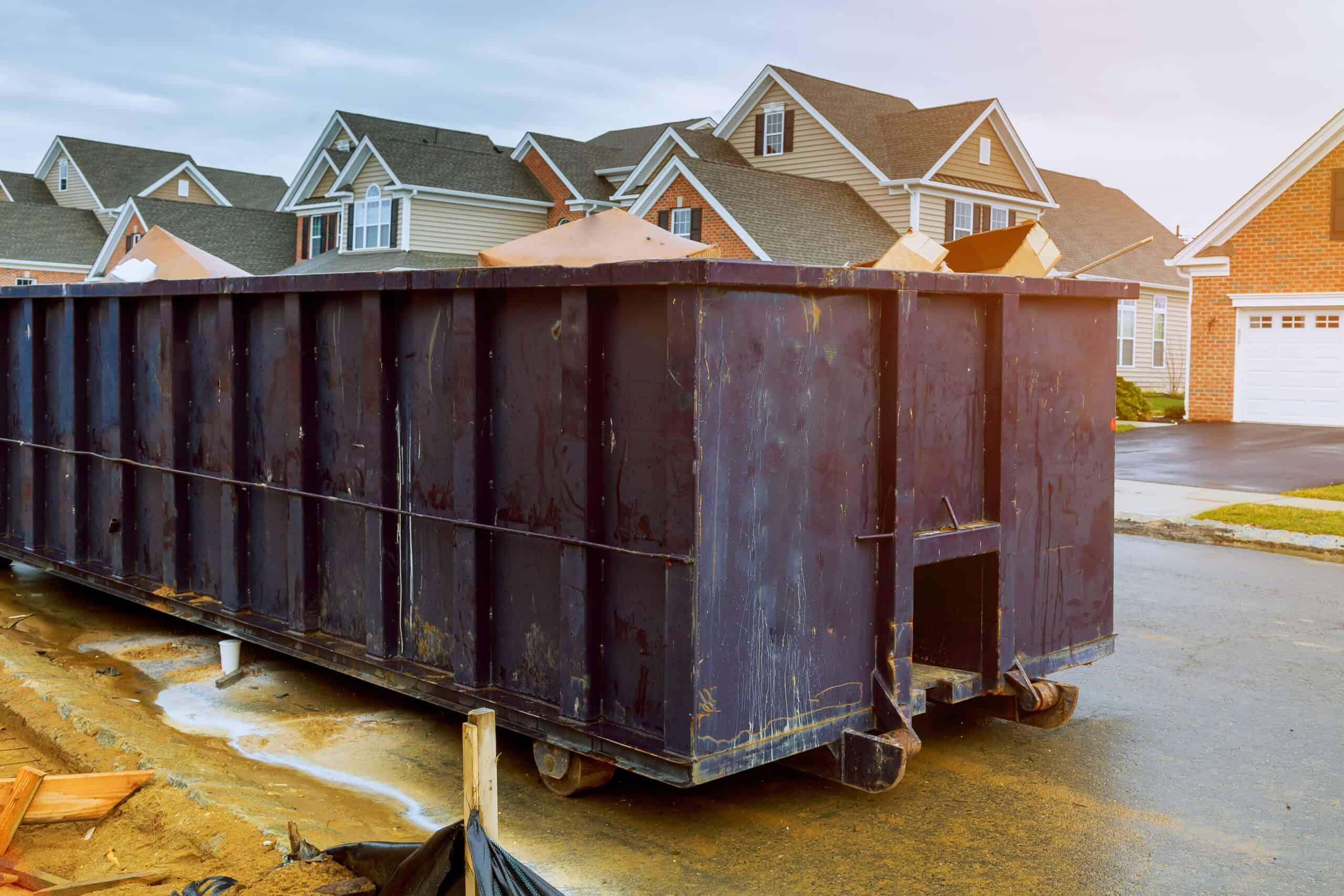
Some things do not vary by city because they are ours rather than the council’s. Both containers are 22 feet long and 8 feet wide, so the ground footprint is identical whether you take the 20-yard or the 30-yard. Only the height changes, 4 feet against 6 feet.
You need at least 15 feet by 10 feet of clear placement area on a surface that can carry a loaded container, a straight approach for the truck, and clearance overhead, because the container tilts as it comes off. We put protective boards down before it comes to rest, and you do not need to be home if the spot is clear and you have left instructions. Our guide on how to prepare for dumpster delivery covers the full checklist.
The Towns We Deliver To
Our coverage centers on Bremer and Black Hawk counties and reaches beyond those lines to neighboring towns, across more than 25 communities within roughly 50 miles of the Waterloo yard. Because that spans several counties, it also spans several sets of rules, which is the whole reason this post exists.
The full list is on our service area page. If you are in one of the larger towns, our guide to dumpster rental in Cedar Falls has more local detail, and our FAQs page covers the questions that come up on every job regardless of town.
Key Takeaways
- On your own driveway or private property you typically need no permit.
- Street, sidewalk, alley, and right of way placements may require one, set by your city.
- The grass strip between sidewalk and curb is often public right of way, not your yard.
- There is no Cedar Valley-wide rule, because every town writes its own.
- Use the phrase public right of way when you call, since that is the language of the ordinance.
- Both container sizes share the same 22 by 8 foot footprint, so size does not change the answer.
Dumpster Permit FAQs
Do I need a permit for a dumpster in my driveway?
Usually not. On your own driveway or private property you typically need nothing. The permit question comes up when the container sits on a public street, sidewalk, alley, or right of way. Rules vary by city, so confirm with your own city hall before delivery day.
Do I need a permit to put a dumpster on the street?
You may. Street and sidewalk placement is where a local permit is commonly required, and every Cedar Valley city sets its own rules. Call your city hall or public works department before you plan around a street placement.
Who do I call to find out?
Your city hall or public works department. Ask specifically about placing a temporary container in the public right of way, since that is the phrase most ordinances use. Get the answer before delivery rather than after the truck arrives.
Is the grass strip by the curb my property?
Often it is public right of way even though you maintain it. That surprises people, and it is the most common reason a placement someone thought was private turns out not to be. Confirm with your city if the container will sit anywhere near that strip.
How long does it take to get a permit?
It varies by city, which is exactly why it is not a same day question. If you think you might need one, start the call before you book the container rather than the day before delivery.
Do you arrange the permit for me?
Ask us when you book so neither party assumes the other has it covered. Either way, do not plan on a right of way placement until your city has confirmed what it needs.
Does the container size change whether I need a permit?
No. Both sizes are 22 feet long and 8 feet wide, so they occupy identical ground. What matters is where the container sits, not which size you chose. Only the height differs, at 4 feet and 6 feet.
What if the street is a highway rather than a city street?
Then city hall may not be the right authority. Not every road through a town belongs to that town, so mention the street name and nearest cross street when you call and let them tell you who to speak to.
Not sure whether your spot counts as private? Describe it to us and we will tell you what we can, and tell you plainly when it is a question for your city instead. Call (319) 406-0043, use our contact page, or email [email protected].